“My eyes have seen your salvation”

A Sermon for the Presentation of the Lord in the Temple

Preached at Trinity Episcopal Church in Easton, Pennsylvania
February 2, 2020

O Lord, mercifully receive the prayers of your people who
call upon you, and grant that they may know and understand
what things they ought to do, and also may have grace and
power faithfully to accomplish them; through Jesus Christ
our Lord, who lives and reigns with you and the Holy Spirit,
one God, now and forever. Amen.

Guide us waking, O Lord, and guard us sleeping; that awake
we may watch with Christ, and asleep we may rest in peace.
Lord, you now have set your servant free *
to go in peace as you have promised;

For these eyes of mine have seen the Savior, *
whom you have prepared for all the world to see:

A Light to enlighten the nations, *
and the glory of your people Israel.

Glory to the Father, and to the Son, and to the Holy Spirit: *
as it was in the beginning, is now, and will be forever. Amen.

Guide us waking, O Lord, and guard us sleeping; that awake
we may watch with Christ, and asleep we may rest in peace.

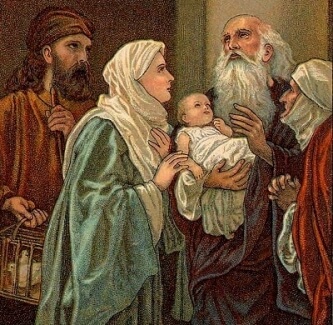
Presentation-in-the-Temple


The words of the Canticle which I just shared with you are taken from the Holy Gospel According to Saint Luke. For those who pray the Daily Office, they are very familiar. They are used each night at the conclusion of the Office of Night Prayer, otherwise known as Compline. This Canticle is sometimes better known by the Latin title of the first few words, “Now you may let your servant depart in peace,” or Nunc Dimittis.

It is interesting that the last song which the Church chooses to sing at the very end of the day is a song about light. “This is the light of revelation to the nations and the glory of your people, Israel.” And yet, it makes sense when we remember that in the Jewish mind of the First Century, the day begins at Sunset and not at dawn. Thus, it is that the day begins with a time of rest—a mini-Sabbath, if you will, which strengthens one for all the tasks which will take place in the second part of the day—after waking in the morning. It is the time of quiet, of peace, and of rest. It is a time of preparation for what is yet to come—for what remains unknown. It is a time in which the efforts and plans of humans are laid aside—a time which is, perhaps, more fully governed by God.

There is perhaps also a sense in which it is a time that requires trust. We do not see well in the dark, and so are often unaware of things which lie outside the small area of light. In an era before electricity, or even flashlights, the darkness must have seemed much more intense. And especially in the cold winter, the nights must have seemed so very long. In such a time, in such a season, there must have been a hunger, a longing, a burning desire for warmth and light—and for the safety which they promised.

Night, though, also reminded those who lived in that time of the presence and promise of God. From the total and encompassing darkness, God created light—the Sun, the Moon, the Stars of the Sky. God illuminated creation and declared it good. Through the drops of rain falling after the flood, God caused light to permeate the rain and created the rainbow-a reminder of God’s abiding love and care for all of creation—and a promise of mercy and compassion. Moses saw God’s presence in the burning bush—which blazed but was not consumed and heard that the very place where he was standing was made holy by God’s presence. The people of Israel were consoled and comforted on their journey by the Pillar of Fire which illuminated the darkness of the desert through which they traveled for forty years. And, the menorah of the Temple reminded the People of God of the Eternal Presence of God in that most holy of places on earth—the very locus of the encounter between heaven and earth. It was, perhaps for this very reason, that the Sabbath candles were kindled at sunset each Friday night and then extinguished at the end of the Sabbath at sunset on Saturday night. It marked a separation between the sacred and the profane.

The Feast of the Presentation of our Lord in the Temple is a feast of light. This feast is also a feast of transition. It marks the definitive end of the Christmas season in some traditions. And it moves us forward to the brief interlude between the infancy of Our Lord and the inauguration of his Public Ministry which is recalled each year at the beginning of the Season of Lent. The account of the Presentation is found only in the Gospel of Luke.

It is helpful to recall the context in which we find this passage. The Gospel of Luke, we remember, is part of a two-volume history of salvation. In three phases, the entire unfolding of God’s saving actions in history is recalled: The Stage of Israel, the Stage of Jesus, and (especially in the Acts of the Apostles) the Stage of the Church.

This first stage, the Stage of Israel, uses common imagery from the Hebrew Scriptures to remind us of God’s actions in the past. Thus, there are Priests (like Zechariah), old people without children (like Elizabeth), visiting angels (like Gabriel) Prophets (like Anna and Simeon), The Shepherds in the field remind us of King David, from the city of Bethlehem. And above all else, there is the Temple—the house where the Lord abides.

In this stage we feast on the songs, or Canticles, which in story form remind us of singers from the Hebrew Scriptures. Each of the Songs of Praise find a place in the daily worship of the Church—the Gloria, “Glory to God in the Highest” commonly recited at the beginning of the Holy Eucharist—and modified as the conclusion to the Psalms, “Glory to the Father, and to the Son, and to the Holy Spirit.” The Benedictus, that song of the Priest Zachariah, “Blessed be the God of Israel,” is used at Morning Prayer, or Lauds. The Magnificat, that hymn of the Virgin Mary, “My Soul proclaims the greatness of the Lord,” is sung at Evening Prayer or Vespers, each night, And the Song of Simeon, the Nunc Dimittis, “Now Lord you may let your servant depart in peace,” concludes the Office of Night Prayer, or Compline, and brings to a conclusion the daily round of prayer at the close of each day. Yet, as we have already remembered, it is at the same time, also the beginning of the day,

In an earlier time, in which candlelight was far more precious, and treasured, this Feast was often called “Candlemas.” It was quite literally the Mass at which the candles to be used during the coming liturgical year were blessed. It was also a day in which the faithful brought their own candles to church to be blessed. There was a tradition in some places that the blessed candles were a visible reminder of God’s love and protection in time of trouble. And so, the blessed candles would be lit during storms or inclement weather. They would be placed at the bedside of those who were seriously ill. They would be lit at the bed of the mother in labor—and as a light to welcome the new-born child—into the world, into the family, into the home. And so there would often be a procession—early in the morning illuminating the darkness as they marched into the church to celebrate the Mass which recalled that the babe of Bethlehem was the “light of revelation to the nations.”

The account of the Presentation is another reminder to us, of the devout piety of Mary and Joseph. They are observant Jews. They fulfilled the requirements of the Law by entering their son into the Covenant with God by his circumcision on the eighth day following his birth. They named him as a child of God: “Jesus,” “Yeshua,” “Joshua,” -a name which means “God Saves.” And now, forty days later, they bring him to the Temple to complete two remaining commands. His mother comes to be Purified following childbirth—and to return to the secular work as mother, wife, and housekeeper. And, as first-born son—one who belongs to God—Jesus is brought to the Temple to be presented to God and to be redeemed or “bought back” so that his parents can raise him in their home.

Anna and Simeon are fascinating people. They appear to us—or at least to those who may be younger—as ancient. They are both in their “twilight years.” They are both preparing for the end of their lives. I suppose that Corporate America might well look at them and think that they are not very successful. They have devoted their entire lives to fasting, prayer, and service in the Temple. They have become fixtures there—a consoling presence to all who come at moments of transition. They welcome those who bring offerings to God to request help, or in thanksgiving. They greet babes, and parents, and especially mothers. They are a kind of two person welcoming committee, who over generations, must have been familiar to families, to pilgrims, and to all who came to find God. They reveal to us, that people at any and every stage of life can be and are called by God. They remind us of the gifts of experience, and faithful service over decades. They also remind us that in the Hebrew Scriptures, God often surprised the old—those whom we might imagine just want to comfortably enjoy retirement by asking them to do astonishing things—to go to a new land, or to begin a family. Things which we might imagine would be impossible to do.

I think that it is not going to far to suggest that Simeon plays a uniquely symbolic role. He is a prophet who celebrates the fulfillment of God’s promises through the prophets. He is a patriarch who welcomes the child of Promise and tenderly takes him into his arms to cuddle and caress him-to lay his hand on the child’s head in blessing. He is a priest who holds the child up and Presents him to God. And he is a herald who announces to all who hear his words, who this child is, and what his presence will mean to the whole world.

Luke does not have the story of the Magi, and so this is the moment in which God’s revelation to the Gentiles is announced. This child will welcome all into God’s family and kingdom—and not only the People of Israel. Like the Shekinah—the very presence of God in the Temple, “God’s glory,” this child will be the “Glory of Israel.” And yet, from the beginning we are warned that Jesus will be a “sign of contradiction,” that his coming will upset the status quo and cause an upheaval in the established order, and that even his mother’s heart will be pierced with a sword (as his own heart will be pierced on the cross). So, even in this lovely and tender moment, the seeds of sorrow are planted.

Simeon, though, celebrates God’s own fidelity to him, personally. God’s promise has been fulfilled. He has seen and held in his own arms the Messiah. And, in that moment, he realizes that God’s promise has been even better than he could have imagined. And so, he concludes with the words which each of us would be blessed to be able to say at the end of our own life:

“Lord, you now have set your servant free *
to go in peace as you have promised;

For these eyes of mine have seen the Savior, *
whom you have prepared for all the world to see.”
“More than a nice Hallmark quote”

A Sermon for the Commemoration of
The Reverend Doctor Martin Luther King, Jr.
Prophetic Voice and Martyr for Justice

Preached at Trinity Episcopal Church
In Bethlehem, Pennsylvania

January 22, 2020

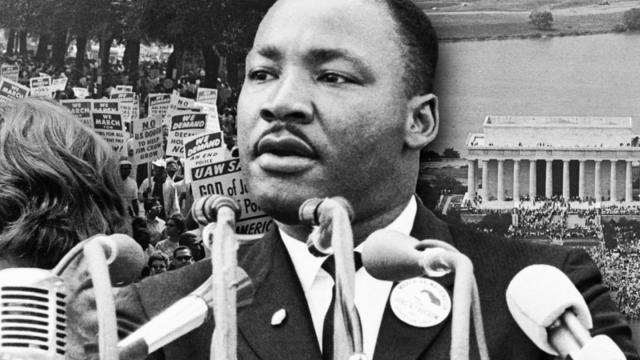
Dr. King image

It is always fascinating to watch how someone who is being honored and celebrated is presented on Facebook. I have found this to be especially true of the recent commemoration of the Birthday of the Reverend Doctor Martin Luther King, Jr.

To my surprise, this year, there was a different assessment—not of Dr. King, but of those who were choosing to honor and to celebrate his legacy. A number of these posts raised an interesting question, “Are we who celebrate Dr. King, attempting to tame or to present him in a way which fits a preconceived mold which we have, rather than remaining true to who he was?” In particular, these posts pointed out that we have a few favorite quotes from Dr. King which we like to use. In them, he comes across as a very benign—but rather uncontroversial thinker. I would like to think that this is because we have indeed made progress. If that were true, it would mean that our own racist attitudes and actions have truly changed. Statements and actions which might have seemed controversial—or even shocking, now seem “normal” and “acceptable.”

Is this the phenomenon of the “taming of the Prophet?” Does this mean that we have lost the impact, the surprise, the shock of Dr. King’s words and actions? Does it mean that we no longer recognize the “newness” in him? Does it mean that we are no longer challenged, energized, and even impelled by his message? Have we allowed him to become a series of nice Hallmark quotes? I cannot help but recall those words of Our Lord about the complacent dwellers of Jerusalem, “Woe to you! For you build the tombs of the prophets whom your ancestors killed. So, you are witnesses and approve of the deeds of your ancestors; for they killed them, and you build their tombs.” (Luke 11: 47-48, NRSV) Those are hard words to hear!

When I read these posts, I was challenged and troubled. It seems to me that the message of Dr. King is every bit as relevant today as it was more than 50 years ago. So many of the same problems—racism, racial profiling, violence against Blacks, subtle forms of segregation and red-lining, gentrification, the “War on Drugs,” voter suppression, and mass incarceration persist. In fact, in some cases, these problems have worsened. What would Dr. King say to us today? So much a part of his own ministry was that of solidarity—he went to the places where people desperately needed someone to walk with them and to speak on their behalf. Where would he be present today? Where should we be visibly present today?

Providentially, I came across a powerful essay written by the late James Baldwin. In it, he reflected on his own experience of being present at the funeral of Dr. King. Most interestingly, though, he wrote—in depth—about the two most important leaders of the Civil Rights Movement; Dr. King, and Malcom X. He pointed out that both of them grew, developed, and changed over the course of many years of struggle (a very healthy thing). He suggested that Malcolm X had “mellowed out,” and that Dr. King had become increasingly “radicalized.” Now that was a fascinating idea!

Tragically, these two Prophetic Voices, these two Men of God, were martyred for the cause of justice. And we are all the poorer for that! Who knows what might have happened if they had been allowed the time and space to work together—and to continue to call us to conversion? As an aside, I completely understand the concept that a Calendar of Saints ought to celebrate lives of Christian holiness. Yet, I cannot help but wonder what powerful message would be sent if we, as a Church, also honored and celebrated the gift, charism, legacy, and witness of Malcolm Shabazz?

In the article, there was a quote which captivated me. Mr. Baldwin clearly saw the essence—to the very rotten core–of the insidious and evil way that racism and injustice function and thrive: “America, Baldwin believed, was split in two—not between North and South but between the powerful and the disenfranchised. Racism, that scourge that beclouded our democracy, remained—remains—the nation’s greatest peril. But the powerful maintained the status quo by sowing discord among the disenfranchised. Poor white folk, rather than uniting with their socioeconomically oppressed brothers and sisters against the rich, trained their targets on poor black folk. They channeled their anxieties into a vengeance against blackness.”

Perhaps Mr. Baldwin too, is a Prophet, who speaks God’s word to us today. Wisdom! Let us be attentive.

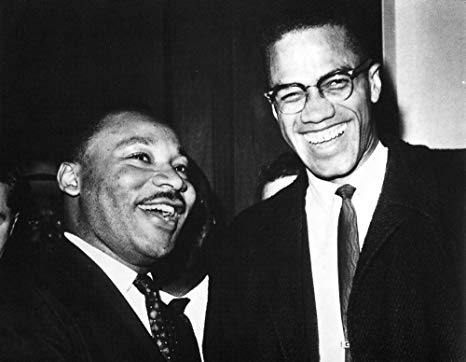
MLK and Malcolm x


“They rejoiced with exceeding great joy.”

A Sermon for the Second Sunday after Christmas
January 5, 2020
Preached at Trinity Episcopal Church
In Easton, Pennsylvania

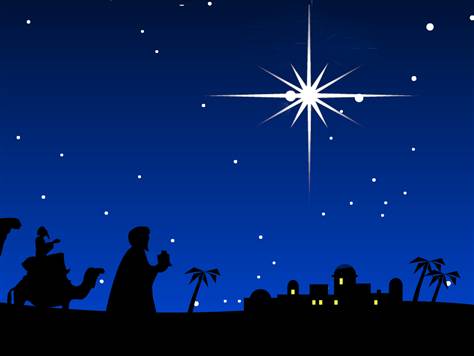
Star-of-Bethlehem for Word Press

Rejoice with exceeding great joy
with March of the Kings, We three kings and The first Noel

Oh when they saw the star they rejoiced with great joy!
They rejoiced with exceeding great joy

O’er mountains and valleys it led them each night. (A star of most radiant light.)
Radiant light and so, the wise men rejoiced as they (The wise men rejoiced as they)
journeyed a far to behold such a beautiful star

Oh When they saw the star they rejoiced with great joy!
When they saw the star they rejoiced with great joy!
They rejoiced with exceeding great joy

(The star shone bright giving)It led those three kings to a Holy Child. (wondrous light.)
When they saw the star they rejoiced with great joy!
Oh one bright day I saw in rich array
When they saw the star they rejoiced with great joy!
three mighty kings all their court go marching,

When they saw the star they rejoiced with great joy!
marching one bright day Kings in rich array
They rejoiced with exceeding great joy
beheld a star shone from far away
They rejoiced with exceeding great joy
We three kings of the orient are.
When they saw the star.
Bearing gifts we
They rejoiced wit great joy!
travel afar.
When they saw the star.
Field and fountain moor and mountain
They rejoiced with exceeding great joy!
following yonder star.

Oh Star of wonder star of night,
star with royal beauty bright,
Westward leading, still proceeding,
Lead us, guide us
guide us to thy perfect Light.
to thy perfect Light.
Star of wonder star of night (Noel, Noel, Noel, Noel)
Star with royal beauty bright (Born is the King of Israel)

Oh when they saw the star,
Oh when they saw the star they rejoiced with great joy!
When they saw the star they rejoiced with great joy!
They rejoiced with exceeding great joy

Lanny Wolfe Arr.: Derric Johnson
© 1978 Lanny Wolf Music/Gaither Cop

This has become one of my favorite Christmas songs, and perhaps my favorite song about the Epiphany—all because of one phrase: “exceeding great joy.” I try to imagine what kind of joy this must be. A joy that exceeds almost any other joy imaginable. A joy that so fills the heart that it overflows A joy that is so complete and perfect that it is like a light which illumines the darkness and reveals everything which had been hidden in the shadows. Not just a great joy-an exceeding great joy!

There is a real danger which we face when we hear very familiar passages. We are tempted to focus on what we know. We know what to expect and so, as we listen, we are waiting for familiar ideas—and even words. We listen for them, and when we hear them, we think—“yes, there it is.” The problem with that, is that it prevents us from “hearing anew” We are not listening for something different or unusual—after all, we know this story. And, we are not trying to look for something unexpected or surprising. The downside of that, is that we could discover that there is new meaning and insight in the old story which we know so well. If we limit ourselves to recalling what we already know, we may fail to discover what the story is able to reveal to us if we look at it a different and untried way.

This past year, I found myself surprised to discover a renewed interest in Holy Scripture. While this is something which I have wrestled with for most of my adult life, and something which I have studied in some detail, I suddenly found myself hungry to learn about Scripture in a new way. I found myself curious to want to understand more about the meaning of the words in their original languages. I found a desire to understand the symbolism and the context of the stories.

Why were these stories written? What message was the author trying to convey by sharing these specific stories? How did this particular passage relate to other Biblical passages? What had this story meant over the centuries? What does it mean to me here and now? What good news—what message of hope and encouragement—is contained in this account? What lesson can I take away from it to live a life which is more fully connected to God, to others and to creation?

This new and different way of engaging with Scripture became far more than a scholarly exercise. the reading of Sacred Scripture provided a mechanism to listen to God and to discern God’s call and plan in my life. It meant putting aside everything which I already knew and becoming open to hearing something new, surprising, challenging, and life-giving

This new approach proved useful in exploring the account of the Visit of the Magi which we encountered in today’s Gospel. I photocopied the text of the gospel and circled each word as it “jumped out at me.” And then, I examined the sequence in which these words were recounted. What did each of these words mean? What did each word contribute to the story as it began to unfold? Could I take these words as they unfolded and tell a story—without worrying about additional or even superfluous words? This allowed me to examine these words in a more focused and specific way than I had previously. By doing this, some details which I had not noticed previously were revealed to me. Some ideas–trees which had gotten lost in the forest–emerged. And I found answers which I had not discovered previously.

There is not enough time to look at each of the words in detail, but I would like to share some thoughts about a few of the more important words with you.

Jesus. The name jumps out at us at the very beginning. It is a name we already know from the Gospel According to Saint Matthew. When the angel appeared to Joseph in a dream, he was told that the child would be named Jesus, because he would “save his people from their sins.” This is a play on words. The name in Hebrew and Aramaic Yeshua or Joshua means “God Saves.” When, on the eight day after his birth, Jesus was entered into the covenant with Abraham through the rite of circumcision and was named, he was recognized as a Jewish child, the offspring of Abraham, Isaac, and Jacob—a descendant of the House of David.

Bethlehem. In Hebrew this name literally means “House of Bread.” It was most famously, the hometown of King David. That it is mentioned here, shows that the child Jesus, is a descendant of the Royal Family. Yet, clearly that does not mean as much as it did at one time—the family of David has fallen on hard times. That family no longer rules in Israel. They lost power when the Babylonians conquered the entire area in 878 BCE and never regained control. The monarchs who came to rule after the Maccabean revolt were Levites-and not from the family of David—and were thus not viewed by many Jews as being legitimate rulers. Later, they were usurped, in turn, by Herod, who was an Idumean (a descendant of Essau). Many thought that Herod was not even Jewish to begin with. His family had been forcibly converted to Judaism several generations earlier and was not even descended from Jacob.

Wise Men. This is a fascinating word. Tomorrow we will celebrate the Feast of Epiphany—sometimes called “The Feast of the Three Kings.” And yet, the text does not call them Kings. Here they are called “Wise men.” The word Magi, derived from the Greek magoi, does not necessarily mean that they were kings at all. Commonly, it referred to a very well-educated court adviser who used the stars to give advice. They combined astronomy and astrology with other kinds of knowledge to make suggestions as to how to proceed in times of discernment. We are not told how many there were or even where they were from—only that they come from the East.

The star. It would be impossible to live anywhere near Bethlehem, Pennsylvania without thinking of the star. It is one of the most visible elements of the Moravian Tradition—there is the illuminated star which may be seen on South Mountain each night. And, notice that we have one here in front of the altar. Much ink has been poured onto paper over generations in an attempt to prove that there was a literal star which the magi saw and followed to Jerusalem—which is the first place that it led them. However, in the early church, there was the notion that the word kokhba in Hebrew or asteri in Greek, might have actually referred to an angel. In Greek, an angel is a messenger—someone who carries news from God. In my own thought and reflection, I imagined that it might have been something like the pillar of fire which guided the people of Israel by night on their journey through the desert towards the land of promise. Whatever it was, it caught the attention of the magi and led them to Jerusalem.

Jerusalem. Now it is time for an embarrassing confession. In all the decades in which I have read and heard this passage, I never paid attention to the fact that the magi were first led by the star to Jerusalem. Was I “gathering wool” in class when we studied this passage in seminary? Perhaps. Recently, I came across a fascinating video by Dr. Brant Pitre. In it, he suggested that the star represented nature and creation. These elements could only take the magi so far. They had to go to Jerusalem (the city from which King David ruled) to have Scripture experts tell them where to find the child.

The Scripture scholars explored the Hebrew Bible and found three prophecies—Numbers 24:17, Isaiah 60: 1-6, and Psalm 72: 1-10. These prophecies indicated that a “king of the Jews” would be born in Bethlehem, the City of David. He would be visited by Kings bearing gifts and that the gifts offered would include gold and frankincense. The point, Dr. Pitre makes, is that Revelation was needed to complete the journey—without the insight gained from revelation, the second phase of the journey would have been impossible. When the magi left, headed for Bethlehem, the presence of the star was the indication that they were headed in the right direction. When they arrived in Bethlehem, where the infant Jesus was, the star “came to rest over the place where the child was.”

Rejoiced with great joy. Now you see the inspiration for the chorus for which I began the sermon today. I just love this verse. The magi realized that their pilgrimage was completed. They had found what they were looking for. The star had led them to Jesus. Their hearts were full to overflowing. This line captures the joy and wonder of that moment.

Fell down and worshiped. This fascinating word (proskyneo) is more than “paid homage” or even “adored.” It is a word which means that the magi literally threw themselves on the ground and gave the kind of respect and devotion that was given to God alone. In other words, their action acknowledged that the child Jesus was God—he was divine. How astonishing, at least in the Gospel of Matthew, this is the first time that this has happened. And, worship comes not from his own people, but from foreigners, gentiles, pagans. The last people who might have been expected to know and to acknowledge something like this. Now, that is unexpected.

Gifts: gold, frankincense and myrrh. They brought three gifts, and so, readers of Matthew and of the prophecies mentioned above concluded that these magi were, in fact, the kings who had been prophesied. Since they brought three gifts, there must be three kings. So there we have it, “We three kings of Orient are.”

We use a theological word to refer to this story, we call it The Epiphany. Epi-phanes in Greek might literally mean something like the “manifestation” or “the appearance upon earth.” But as it was used at that time, it describes something like “the revelation upon earth of the child in Bethlehem as the Son of God.” Oddly enough, I am one of those unusual people who think that Christmastide ought to actually end with the Feast of the Presentation of the Lord in the Temple. Why, you might ask? Because when the Priest Simeon takes the child Jesus in his arms and gives thanks to God he utters that famous prophecy, “this is the light of revelation to the nations, and the glory of your people, Israel.” Simeon’s words explain what had happened when the magi or kings had visited the child Jesus.

There is also an interesting connection to the Feast of Lights or the “Feast of the Dedication,” as Chanukah is called in the tenth chapter of John (10:22-30).In that passage Jesus is at the Temple in Jerusalem during Chanukah. Perhaps there was a special menorah at the temple which was kindled on the feast—in addition to the hanukiyot which people kindled in their homes. Judah Maccabee led a revolt against the evil king Antiochus IV in the year 167 BCE. Antiochus desecrated the temple in Jerusalem, forbade Jewish religious practice such as circumcision, forced observant Jews to eat pork, and tried to transform Judaism into Greek modes of thinking. He gave himself another name, Epiphanes. His use of this title indicated that he considered himself to be divine. For the Maccabees, none of this was tolerable. So, against immense odds, they fought a bloody and vicious war which lasted six years. When they finally defeated Antiochus and regained control of the temple, the miracle of Chanukah occurred when the oil for re-dedication—which only should have lasted for one day, lasted for eight.

In the minds of the community of Matthew, it seems no stretch of the imagination to see Herod as another version of Antiochus Epiphanes. The Emperor in Rome was also beginning to be worshiped as divine. That miraculous oil of the temple menorah reminds us of the light of a star—and of Jesus as the “light of the world.”

The “good news” for this for me is that the discovery of Jesus by outsiders, foreigners, and aliens, points to the importance and significance of Jesus for all. His coming brings the promise of light, hope and “exceeding great joy” for the whole world. The gifts which the magi gave to Jesus help us to better understand the mystery which he represents: he is Priest (frankincense), Prophet (myrrh) and King (gold).

As we continue the journey with Matthew during this year, we will learn more about the ways in which all of this plays out in the ministry of our Lord and in the saving mystery of his passion, death, and resurrection. May we too love, serve, and worship him. And as we do, may we rejoice with exceeding great joy.

“DON’T LET THE LIGHT GO OUT”

Light One Candle
Peter, Paul and Mary

Light one candle for the Maccabee children
With thanks that their light didn’t die
Light one candle for the pain they endured
When their right to exist was denied
Light one candle for the terrible sacrifice
Justice and freedom demand
But light one candle for the wisdom to know
When the peacemaker’s time is at hand

Don’t let the light go out!
It’s lasted for so many years!
Don’t let the light go out!
Let it shine through our hope and our tears. (2)

Light one candle for the strength that we need
To never become our own foe
And light one candle for those who are suffering
Pain we learned so long ago
Light one candle for all we believe in
That anger not tear us apart
And light one candle to find us together
With peace as the song in our hearts

Don’t let the light go out!
It’s lasted for so many years!
Don’t let the light go out!
Let it shine through our hope and our tears. (2)

What is the memory that’s valued so highly
That we keep it alive in that flame?
What’s the commitment to those who have died
That we cry out they’ve not died in vain?
We have come this far always believing
That justice would somehow prevail
This is the burden, this is the promise
This is why we will not fail!

Don’t let the light go out!

In the Twenty Fifth Chapter of the Gospel of Mathew (Matthew 25: 31-46), our Lord invites us to take a stand for those who are in need—in any way, “just as you did it to one of the least of these, who are members of my family, you did it to me.” Most of the time we think of this as an imperative to care for the homeless, the hungry, the weak and vulnerable, the powerless, the oppressed and those who are imprisoned—widows, orphans, and aliens. Clearly, that is literally what Jesus says.

There is another way to read this passage, though. It makes perfect sense for me to read it literally in another sense, whatever we do for—or to—the Jewish family and community of Jesus we do to him!

In recent years, historians have spoken of the two “besetting sins” of the United States: chattel slavery (and the subsequent racism which follows) and the genocide and robbery perpetuated against our indigenous Peoples. It seems to me that the same logic must also be applied to Western Christianity. The besetting sin for us is that of Anti-Semitism.

Years ago, as part of the quest to understand what it meant to be a descendant of a Sephardic Jewish family which had been exiled from Toledo in 1492, I read a powerful and life-changing text: Under Crescent and Cross: The Jews in the Middle Ages by Mark R. Cohen. This book raised a surprising question, “Why was it that Anti-Semitism took a more violent and confrontational stance in areas controlled by Christians as opposed to those under the control of Muslims?” The book was quick to point out that there had also been incidents and conflict with Muslims, but to a lesser degree. The simple answer to a complex question is that in the West, Jews were the primary minority. They were easy to clearly identify as “other.” And so, the long history of pogrom, Crusade, and expulsion occurred. Whereas in Muslim territories, Jews were only one among many minorities (including various groups of Christians).

Following Vatican Two, at least in the Roman Catholic Church, there was a real desire to implement the important inter-Faith work begun by Nostra Aetate (October 28, 1965) —And yet, it remains a constant struggle! On an official level, horrors like the “blood libel” and charge of “Deicide,” were repudiated. Steps were taken to issue warnings at the beginning of Holy Week that the Passion Narrative must be understood in a clearly defined historical context: “Jew,” or “Jews” are terms which refer to Jewish leaders of first century Jerusalem and not the Jewish people as a whole. The solemn collect for the conversion of the Jews was removed from the Good Friday Liturgy (always the day which Jews in Central Europe feared most because of the frequent, almost annual, pogroms which occurred on that day).

This is a first step in the right direction. But it is only a beginning. It is clear to see the bloody path from pogrom to Crusade  to Expulsion (from almost every single country in Western Europe at one time or another–to extermination camp. All done in the name of God (though usually really done for financial gain)! There is so much for which we Christians must atone. For evil acts which we did, and for righteous acts which we so often failed to do!

As a Christian, one of the greatest and most powerful realities has been my own desire to understand what it meant for Jesus to be Jewish, what it meant for Mary to be Jewish–what it meant for Peter and Paul, and Martha and Mary and Lazarus to be Jewish. That is something which remains to be fully claimed by those in the Jesus Movement.

What would happen if we proclaimed the Jewishness of Jesus in such a powerful way that no one could ever mistake it! What would happen if we expressed our connection to the Tree of Jesse so powerfully that everyone understood our own sense of connectedness and belonging to the family of Abraham, Isaac and Jacob—and of King David. What would happen if we proclaimed the conviction that any act of hatred or violence perpetuated against our Sisters and Brothers of the Jewish faith, was also perpetuated against Yeshua ha Mashiach! If we truly proclaim Jesus to be “Messiah” (Christos) and “Lord” (Kurios), then we can never ignore or permit evil against his—and our—Jewish Sisters and Brothers.

What has been exceptionally troubling in recent years, has been the escalation of violence. When marchers at Charlottesville chanted anti-Jewish slogans, and when attacks at synagogues—and other “safe spaces” for the Jewish community—occurred over seas and at home, many of us hoped and prayed that the very worst had happened. The horrible attacks and vandalism in NYC and in Jersey City made it abundantly clear that was only wishful thinking. The recent attack at the home of a Rabbi in Rockland County, in “upstate” New York, in which a family gathered to celebrate the Festival of Hanukah-a festival which the Gospel of John reminds us that Our Lord celebrated in Jerusalem with his own family and friends (John 10: 22-30), has taken things to an unprecedented and unimagined level
.
The time has come for every person of faith to take a stand! It is time for us to stand in unity and solidarity with our Jewish Sisters and Brothers in a clear and ambiguous way. United with them, we will refuse to “let the light go out,” as the beautiful Hanukah song, Light One Candle, reminds us. Whatever is done to them, is done to us as well—because they are an essential part of our own beloved family.

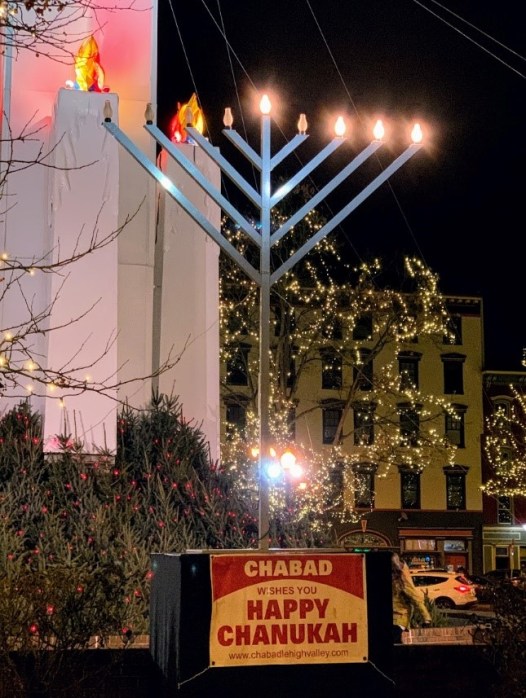
Chanukah Menorah in Easton on Christmas Eve 2019


This Chanukah Menorah (Hanukiyot) was photographed
at the Circle in Easton, Pennsylvania
on Christmas Eve, December 24, 2019
–the Third Night of Chanukah.

“Am I not here who am your Mother?” The Feast of Our Lady of Guadalupe

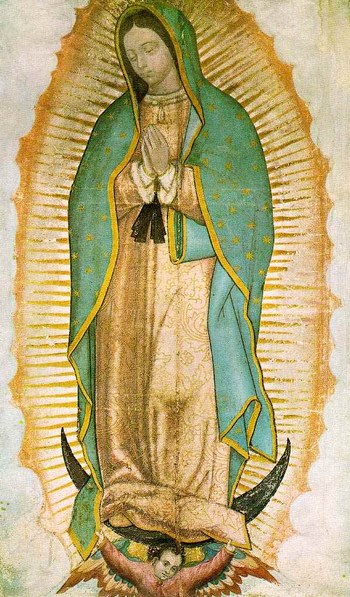
Nuestra Senora de Guadalupe

A sermon for the Feast of
Our Lady of Guadalupe
Patroness and Mother of the Americas

Preached at Trinity Episcopal Church
Bethlehem, Pennsylvania
December 11, 2019

“Am I not here who am your Mother?
Are you not under
my shadow and protection?

Am I not the fountain of your joy?
Are you not in the fold of my mantle,
in the cradle of my arms?


Some Children See Him
by James Taylor

Some children see Him lily white,
The baby Jesus born this night.
Some children see Him lily white,
With tresses soft and fair.

Some children see Him bronzed and brown,
The Lord of heav’n to earth come down.
Some children see Him bronzed and brown,
With dark and heavy hair.

Some children see Him almond-eyed,
This Savior whom we kneel beside.
Some children see Him almond-eyed,
With skin of yellow hue.

Some children see Him dark as they,
Sweet Mary’s Son to whom we pray.
Some children see him dark as they,
And, ah! they love Him, too!

The children in each different place
Will see the baby Jesus’ face
Like theirs, but bright with heavenly grace,
And filled with holy light.
O lay aside each earthly thing
And with thy heart as offering,
Come worship now the infant King.
‘Tis love that’s born tonight!

The beautiful Christmas song by James Taylor reminds us of the universal message of Jesus the Christ. The joy of inculturation is that each culture tells the age-old story in ways that are meaningful and transformative in their own unique context.

Certainly, the historical Jesus could not have been Caucasian, blond and blue-eyed. Images do matter! Unless each person is able to see their own humanity reflected in the divinity of Emmanuel, the “good news” of the incarnation will be something that matters to others—and not something which evokes in them the sense of love and connection which Taylor sings about so eloquently.

In the season of Advent, a season in which we recall the mystery of the Incarnation as lived first by the Virgin Mary, we could easily modify those lyrics . . . “Some children see her “lily white,  or bronzed and brown, or with yellow hue,  or dark as they . . . Mary of Nazareth.”

This seems especially appropriate on the Feast of our Lady of Guadalupe—a day in which we celebrate the mystery of the Mother of God as seen through the eyes of a faithful Nahuatl-speaking Aztec peasant. He claimed that the Virgin Mary had appeared to him, as an Aztec maiden, and had told him that she was his Mother, and that he was in the cradle of her arms, and beneath the fold of her mantle. Her message gave him the courage which was necessary to approach the powerful Franciscan Bishop of Mexico City and to deliver to him the tilma which convinced Bishop Juan de Zumárraga of the authenticity of the apparition.

I do not like the word, “Protestant.” It seems to be a pejorative term applied to people who were really “Reformers.” They were not so much protesting, as calling for a return, as they understood it, to the essentials of Holy Scripture and of the lived-experience of the primitive Church. Of course, both of those building blocks were viewed through a certain lens. Consequently, they reacted against what they considered to be “abuses,” and “distortions.” Among those, was what they perceived to be an erroneous perception of the role, importance, and significance of the Virgin Mary.

Well-educated, and benefiting from the new and heady scholarship of the Renaissance, they looked disdainfully on the popular piety of the common folk. One target was the Shrine of Our Lady of Walsingham—until the Reformation, it was the single most popular Marian pilgrimage site in Europe—and was only surpassed by the numbers of Pilgrims travelling to Rome and to Santiago de Compostela. In their zeal, they burned the image of Our Lady of Walsingham and tore down the Holy House—England’s Nazareth.

Sadly, the English reformers “threw out Our Lady with the waters of renewal.” There was a dark side to their teaching—women often came out “on the short end of the stick.” And the Mother of God was especially suspect. They chose to ignore the Annunciation, the Magnificat, the Visitation, and Mary’s role at the Wedding at Cana—or else only viewed them through distorting Christocentric lenses. And they chose to highlight—and in some cases misinterpret—other texts which downplayed the importance of the biological family of Jesus.

If Jesus did not have a real human family, though, he was not truly human. Mary and Joseph, as a traditional baptismal prayer reminds us, were “the first teachers” of Our Lord. In their home, he grew in wisdom, faith and understanding. They lovingly prepared him to answer the call to ministry when it came to him. They supported him in his ministry to the best of their ability. His mother walked with him thorough his Passion, stayed with him at the cross, and took his lifeless body into her arms as he was taken down from that cross.

Today we celebrate a Feast which is both meaningful and painful to many at the same time. For many of our Latino Siblings it is a day of immense joy. It is a celebration of their importance, significance and beauty as beloved children of God. It is the powerful assertion that their culture and their language are capable of transmitting the saving good news of God’s revelation.

For many of our Anglican Siblings in Mexico, though, it is a sad day—a day in which they are reminded of past persecution by others in the name of Guadalupe. On the Feast of Our Lady of Guadalupe in the last decade of the Nineteenth Century, Mexican Anglicans were attacked at worship in Atzala, and some twenty were martyred. The mob which attacked the Church in Atzala claimed to be serving “true Christianity,” and “Our Blessed Mother.” They forgot that Our Lady of Guadalupe is the Mother of all—and not just of a few. All are comforted in her arms and are beneath the protection of her mantle.

On this Feast of Our Lady of Guadalupe may we truly see “him,” may we truly see “her,” as our own—and yet celebrate that every human person is invited to do the same.

Surprise!

A Sermon for the First Sunday of Advent
December 1, 2019

Preached at Trinity Episcopal Church
in Easton, Pennsylvania

Almighty God,
you have poured upon us the new light of
your incarnate Word:
Grant that this light, enkindled in our hearts,
 may shine forth in our lives;
through Jesus Christ our Lord,
who lives and reigns with you,
in the unity of the Holy Spirit, one God,
now and forever. Amen.

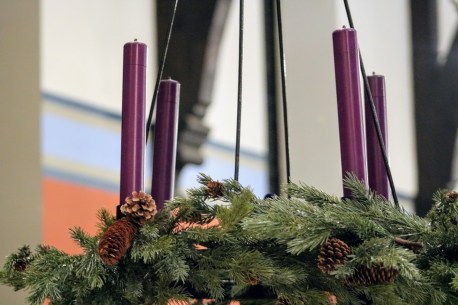
Advent Wreath

In the past few weeks, I have been giving a good deal of time to thinking and praying about Advent. In my reflections, I looked for a word that would help me to more fully understand what the season is about—and which might also give me some insight into how I might get as much out of the season as possible. The word which came to me this year is “Surprise.

When I googled the word, this is what I found: “to be taken unawares, a feeling caused by something unexpected or unusual.” But it is closely related to another interesting word: “amaze” which is defined as “something which causes a person to wonder and puzzle over it.”

Surprise is much more than that, though. Unlike shock, which is seldom pleasant, surprise is also related to joy, to delight, and to happiness. We do not often experience surprise. When it happens it makes an impression on us. We often remember them. We recall the moment of surprise vividly. And in some cases, it is life-changing. One example which comes to mind is that of the marriage proposal. When I have witnessed them in videos online, there is a series of emotions seen on the face of the person being surprised: confusion, embarrassment, dawning realization, joy, and often tears. We all wait, hoping that they will say “YES,” and then there is a feeling of happiness in our hearts when they hug or kiss—and the ring is placed on the finger.

I think that Surprise is a good word for Advent! I would like to share with you a few surprises which I find hidden in the season.

To “unpack” the surprise of Advent, I would like to turn to the well-known theologian, Forrest Gump: “My momma always said, “Life was like a box of chocolates. You never know what you’re gonna get.”’ Let us slightly modify that, “Advent is like a box of chocolates, you never know what you’re gonna get.”

Yes, my sins have found me out. I am also inspired by the single best Advent Calendar I ever had. It came from somewhere in Europe and had a calendar imposed on a little box which was opened every day. It was a candy box. Behind each door was a luscious piece of candy. And each day was a surprise. I literally did not know what I was going to get. The candy, though, was delicious. I have never forgotten that calendar!

The first Surprise for Advent is that is the Liturgical New Year. It is the beginning of the “Year of Grace.” It takes us on a journey in which we recall the main events of the Life and Ministry of Christ and of the adventures of the first disciples and Apostles. It is one story which takes us through Advent, Christmas, Epiphany, Lent, Holy Week, Easter, Pentecost, and into the long “Ordinary Time” of Sundays after Pentecost.

The Second Surprise is that Advent has more than one focus. It is intentionally divided into two parts. The first 17 days focus on the Second Advent, the Second Coming. It reminds us of that statement of Faith which we make every Sunday, “He will come again in glory to judge the living and the dead.” This is a future Advent. One for which we wait and long and hope. Our Gospel today makes clear to us that this will indeed be a surprise. No one knows when it will happen. And, even if we make every effort to prepare and be ready, it will take us by surprise, it will astonish us.

And then on December 18th, the focus changes to a preparation for the annual celebration of the First Advent. Again, there is a long list of surprises: Mary is surprised, Joseph is surprised, all of Nazareth is surprised, cousins Elizabeth and Zechariah are surprised. There is the unexpected and surprising trip to Bethlehem. Surprise! There is no room in the inn. The Holy Family finds themselves in a manger surrounded by curious animals who keep them company—and perhaps keep them warm. The angels take the shepherds in the fields by surprise. Herod is surprised by the magi. Mary and Joseph are surprised by mysterious gifts of gold (a kingly gift), frankincense (a priestly gift), and myrrh (a prophetic gift). All of this is completely unexpected. It is astonishing. It is the best surprise ever. It is a surprise which changes everything. In the dark season of Advent in which the days seem so short and the nights so long, in which warmth begins to seem a faint memory and the cold seems so oppressive—there is glorious light. A light which is so powerful and overwhelming that we are literally blinded and stopped in our tracks. Everything which we had thought and believed is called into question. There is a new truth which causes us to reevaluate, reassess, and which calls us to recommence a journey of faith!

There is perhaps the greatest surprise of all: “God is like a box of chocolates. You never know what you’re going to find and experience when you encounter God.”

For today, though, let us focus for a moment on that First Surprise of Advent. We hear today the words of our Lord Jesus Christ, when he speaks to us from the Mount of Olives about the Second Advent in glory and power. I am fascinated that this kind of passage has been used “frighten,” to “intimidate,” and to “threaten” people in order to get us to “toe the line.” I have always thought that this is a very poor way of describing God. When interpreted in this very narrow and dark way, it sounds like God is setting us up for failure and is just waiting to catch us unprepared–and then to punish us. I am reminded of the humorous T-shirt which I saw years ago, “Jesus is coming soon, act busy!” It also reminds of someone else who is making a “nice list” and a “naughty list” and who is anxiously working to find out “Who has been naughty and who has been nice.” But is that God? Surprise! I do not think so.

What if the words of Jesus were intended to console and comfort people who live confusing lives in troubled times? What if these words were intended to give hope rather than to produce despair? What if these words were intended to encourage and to motivate—rather than to paralyze and to incapacitate? Perhaps that is what Advent is all about?

Advent is a season in which we admit that we are powerless. As a community of Faith, we have had more than two thousand years to be light, salt and yeast. Sadly, we even had power and exercised political control—even for centuries. And yet, looking at our track record, there is not always a great deal to celebrate.

We have not eliminated poverty, war, violence, prejudice, hatred or injustice. Our world often feels dark, wounded and broken. On our own, left to only our own efforts, there might not be room for hope. As we have been told, the problems created with a certain way of thinking can not be solved with the same thoughts.

What would happen if we as individuals gave up? What would happen if we said, God, “I can not solve these problems alone!” What would happen if we asked God to take control? What would happen if we said, “Your will be done, your kingdom come?” And what would happen if we asked God, “What do you want me to do?”

We can not solve the problem. We are told, though, that God can, and God will, if we ask. Then what is preventing us from asking? I think that it is fear. It means giving up control. It means admitting that we are overwhelmed by the world’s problems. It means that we really do not even know how to get started. It means that we desperately need God to take control. It means adopting God’s agenda and abandoning our own plan.

Our Presiding Bishop and Primate, the Most Reverend Michael Bruce Curry has taken us by surprise. He has invited us to become a Beloved Community, to reconnect to the primitive roots of the undivided Jesus Movement, and to enter into the journey of a life lived in the Way of Love. Our Beloved Bishop Curry is a constant source of surprise and delight. His vision of a life lived in unity with God offers us a way forward. It is a model of how we can move from where we are to where God wants us to be. It is the discovery that God is active here and now in unexpected and astonishing ways. It reminds us that God is truly doing for us what we are not able to do alone!

What we need, though, is a model—an example, a paradigm. What does God want our world to look like? What would Jesus like to find when he returns in glory? There is no better place to turn than to the writings of the Prophets. The Prophet Isaiah shares with us the surprising vision he had of an encounter with God in the Temple. If you have not read the Sixth Chapter of Isaiah in some time, I encourage you to find time to read it again. Please note that at the very center, God overcame every excuse that Isaiah could come up with to get out of doing God’s will. Note what happened when Isaiah surrendered and finally said yes to God! No one was probably more surprised to hear himself volunteering to God, than was Isaiah: “Here am I, send me.”

The example that Isaiah gives us is of a new temple in a new Jerusalem. It is on a mountain so high that no one can miss it. It is so beautiful that everyone is drawn to it. And, here is the good news: No one is excluded! In this vision of the Prophet, God makes of one family all the nations of the earth. All join in peace, unity, and abundance to worship together in harmony. All binaries are eliminated: rich and poor, powerful and weak, every dichotomy is abolished and eliminated. This vision is accomplished by God—it is not something which we can make happen.

The promise of the Second Advent is not an escape plan in which we just wait around for God to “beam us up” to heaven. It is not a plan B—our plans will inevitably fail, but God’s plan will not fail! It is not a “you are not responsible” card which absolves us of the need to work tirelessly for the coming of the fullness of God’s reign–here and now.

Just the opposite! It means that we are responsible to use every gift, talent, ability and every bit of energy that we have, to be a People of Love and an inclusive Community of Love. IT does mean that we are not in charge. God is in charge. It means that we buy into God’s plan—because not only does God know better than we do, God loves us absolutely, completely, and totally—and truly wants what is best for us. God sees and creates options and opportunities which we would never see–and could not even imagine. Loving us so much to choose to become one with us—to become truly human and to share our life! Surprise! If we are willing to trust in God and give God control, the very best is yet to come.

In this time of darkness, and cold, and fear, I share with you a beautiful antiphon which was often chanted at the beginning of Vespers—or perhaps when the candles of the Advent wreath were lighted: “Jesus Christ is the light of the world. A light no darkness can extinguish.”

May this Advent be a time of delightful surprise and astonishment for you! May you find in your Advent box of Chocolates the transforming, life-giving and empowering love of God. As you savor and delight in God’s love for you may you rejoice with exceeding great joy. And may you, in turn,  share your surprise, astonishment and delight with every person God brings into your life.

MARGARET, Queen of Scotland, Helper of the Poor

A Sermon for the Observed Feast of

Saint Margaret, Queen of Scotland

November 13, 2019
Trinity Episcopal Church
Bethlehem, Pennsylvania

A note: On January 10, 1981, I was received into the Roman Catholic Church by a Profession of Faith and then received the Sacrament of Confirmation. I chose, as my Patron, King David of Scotland. Since that time, I have had a special devotion to Saint David, King of Scotland and to St. Margaret, Queen of Scotland–his mother.

You might not be especially interested in genealogy. As a Southerner, it is something which I grew up with. I remember a very funny event. In High School, I was trying to tell my Mammaw Cook about one of my friends. She asked me, “Who is he?” I started to tell her about him—where he lived, what his parents did, etc. Mammaw, interrupted me, “No, tell me who he is!” I had to tell her that I did not know the names of his grandparents or great-grandparents. So, from Mammaw’s perspective, I did not know who he was!

Saint Margaret, Queen of Scotland, was an Anglo-Saxon Princess. She was the great-great-niece of Saint Edward the Confessor. Her father, had he lived, would have become the King of England, when the Confessor died. Had that happened, William the Conqueror might have never invaded England in 1066.

Margaret was also (supposedly) the grand-daughter of Saint Stephen of Hungary and of a Bavarian Princess. She was the mother of Saint David, King of Scotland—and of Matilda, the wife of Henry I of England. She was the great-grandmother of Henry II (who had St. Thomas a Becket killed).

Margaret lived at one of the most fascinating moments in the history of Britain. Her life took very unexpected turns. Born in exile, raised abroad, she returned to England briefly, and then had to flee again. She found herself shipwrecked in Scotland and then the wife of King Malcolm. Pious child of a devout family, she took faith seriously. Tireless worker to make Christianity more than a nominal faith in her adopted homeland, she cared for the poor, the sick, and ransomed Saxon slaves who found themselves on the wrong side of history. He own example so inspired her family that her son, in turn, also became a Saint.

King James VI and I is claimed to have later said of Margaret and David, that their lavish generosity to the poor and needy had been so great the Scottish monarchy “never financially recovered from it.” What an amazing thing to have said!

On this Feast of Saint Margaret, Queen of Scotland, may we too be known as “helpers of the poor.” May our faith be real, present, and effective through our concrete actions to love and to care for all those who are in need. May this be especially true in this cold season in which so many, like our Lord, “have no place to lay their head.” Through the generosity of God’s people, and through the intercession of Saint Margaret, Queen of Scotland, may their needs be met.

St. Margaret Queen of Scotland

“Choose the Road that Leads to Life, to Blessing, to Happiness, and to the Holy.”

A Sermon for All Saints’ Sunday

November 3, 2019

Preached at
Trinity Episcopal Church
Easton, Pennsylvania

O God, you prepared your disciples
for the coming of the Spirit
through the teaching of your Son Jesus Christ:
Make our hearts and minds ready
to receive the blessing of the Holy Spirit,
that we may be filled with the
strength of his presence;
through Jesus Christ our Lord. Amen.

________________________________________________
 

“Road To Zion” by Petra 
[Based on Psalm 84:5-7]

 There is a way that leads to life
The few that find it never die
Past mountain peaks graced white with snow
The way grows brighter as it goes
 
There is a road inside of you
Inside of me there is one too
No stumbling pilgrim in the dark
The road to Zion’s in your heart
 
The river runs beside the road
Its waters living as they flow
In liquid voice the water calls
On thirsty knees the pilgrim falls
 
Sometimes a shadow dark and cold
Lays like a mist across the road
But be encouraged by the sight
Where there’s a shadow, there’s a light
 
Sometimes it’s good to look back down
We’ve come so far – we’ve gained such ground
But joy is not in where we’ve been
Joy is who’s waiting at the end

To listen to the song on YouTube, please use this link.
 

One of the most powerful images which those in the primitive Jesus Movement used to speak of themselves was “The Way.” They self-identified as Pilgrims on a Journey. Like their ancestors who had left Egypt and wondered through the desert to the Land of Promise, they saw themselves as being part of a New Exodus, traveling to a new Promised Land. The very language which they used made this imagery clear: “There is a road that leads to life . . . there is a road that leads to death.”

This language was inspired, of course, by the words of Jesus. But, for them, it served to confirm the reality of the often difficult, confusing, tiring, and troubling journey which they undertook. Like their ancestors in the desert they faced dangers, snares, and obstacles; hunger, thirst, and serpents (literal and figurative). It was not an easy road to travel. At times, the journey seemed too much for them. They were tempted to give up, to admit defeat, and to abandon the trip.

At such moments, these earthly pilgrims turned to the words of Jesus for comfort, for strength, and for hope. At such moments of crisis and difficult decision, they recalled the honesty with which the Lord had prepared them for their journey–which they had begun with his blessing and undertaken in his name.

One source of encouragement which these Pilgrims relied on was Jesus’ teaching about “Blessedness,” they called this teaching the “Beatitudes.” These consoling words of the Lord reminded them of the importance of persevering “on the Way,” and of making sure that they were, in fact, traveling on the road that “leads to life” and not on the road that “leads to death.”

It is not uncommon for people to shake their heads when they hear the “Beatitudes” from the Gospel of Luke. We are far more accustomed to hearing the eight blessings from the Gospel of Matthew. They, of course are addressed, all except the last one, in the “third person:”

  • Blessed are the poor in Spirit
  • Blessed are those who mourn
  • Blessed are the meek
  • Blessed are those who hunger and thirst for righteousness
  • Blessed are the merciful
  • Blessed are the pure in heart
  • Blessed are those who are persecuted for righteousness sake
  • Blessed are you when people revile you and persecute you on my account

So, then, the obvious question is “Why does Luke present this same teaching in such a different way?” Why use “blessings” and “woes” rather than just blessings?

Luke also chooses to address his listeners in the second person, rather than the third: “you,” rather than “they.” Luke wants to make clear to us that we are faced with a choice. We will either choose the arduous “road that leads to life” and to happiness, or we will choose the easy “road that leads to death” and to sadness, woe, and regret.

In both recollections of this Sermon, Matthew and Luke reflect on the teaching of Moses on the Mountain–after he had handed on the Law to the People of Israel. In the Twenty-Eighth Chapter of Deuteronomy, Moses followed the presentation of the Law with words of advice. If you follow the law which God has given, you will find happiness, joy, and fulfillment. If you do not, you will find sorrow, sadness, and disappointment.

Jesus’ audience knew the Torah well—some even by heart. So, they would have been quite familiar with that teaching. Their own history would have taught them the truth of Moses’ instruction. Although there had been fleeting moments of glory under David and Solomon, much of their history had been one of factional in-fighting, violence, and subjugation by outside powers: Egypt to the South, Assyria, Babylon, and Persia to the North and to the East. The prophets had been quick to suggest that their defeat had come about because of the poor choices which they had made. They had not chosen the road which led to happiness and life, but rather the road which led to sorrow and to death. In fact, the Northern Kingdom of Israel had literally disappeared—swallowed up by the Assyrians. Their choices literally brought them woes rather than blessings!

In an unexpected move, Luke turned Moses’ instruction on its head! He suggested that the things which might appear to bring woe and sorrow in this life are actually blessings when traveling with the New Exodus to the Land of Promise. Material blessings in this world could actually be distractions, stumbling blocks, or obstacles, to finding happiness in the life to come.

To put it simply, Luke suggests that followers of Jesus will have to make a difficult choice. Either we choose to make the priorities of God’s reign our own, or else, we will choose lives which are self-centered and primarily devoted to finding fulfillment in the here and now.

The question then is “How does one find happiness, value, meaning and purpose in life?” The Greek word for “blessed” is makarios—which literally means “happy.” Using that insight, let us listen again to what Jesus tell us. “You will find happiness if you are poor, if you are hungry, if you weep, or if you are mistreated. You may well find only sadness if you are rich, if you are full, if you laugh, or if you are praised.”

Why? Because those in the “happy” group have learned to totally and completely trust in God. And those in the “sad” group have no real need for God in their lives. It is the story, which we have heard so often, of those who appear to “have everything,” and yet are lonely, isolated, fearful–even miserable. It reminds us that the things which appear most important at a given moment often prove to be quite insignificant in the end. We come into this world with nothing and we will take no material possessions with us when we leave.

God does not want us to be homeless, starving, tearful and abused. In fact, God does not desire those things for any of his children. We are reminded that it is our duty to alleviate those sad conditions for anyone who suffers from them. And yet, we learn that the weak, the poor, the homeless, and the oppressed need greater faith than we do. They have only God to care for them and so they have learned to be completely dependent on God.

On many occasions Jesus singles out three particular groups—and reminds us that these groups are sacred to God. God treasures widows, orphans, and aliens or foreigners. They are the most vulnerable because they have no one else to help them. They have no safety net. They have only God.

There is another group which is especially dear to Jesus: children. Throughout the Gospels we see the tender interactions that Our Lord has with children. He welcomes them, embraces them, lovingly touches them, holds them, and blesses them. They are a source of great blessing and happiness for him. “Let the children come to me, do not hinder them.” He often uses children as models and as examples of faith to us.

Parents so often feel a tremendous sense of obligation when they first have children. They are responsible in a way that they have never been before. They must care for their children. They must feed and clothe them. They must provide health care and education. They must guide and help their children to grow to become good and responsible adults. At first, they can feel overwhelmed and inadequate as they contemplate the duty which lies before them.

Jesus, though, suggests that parents have the opportunity, if they choose to accept it, to become students rather than only teachers. Their children will teach them many important lessons as they grow and mature. The most important of these might well be the reality of faith—and the reality of happiness.

Children find it easy to believe. Faith comes to them easily—even automatically. They do not struggle to accept mystery. They do not want or need complicated answers to difficult questions. They have not yet become jaded, cynical and skeptical. They are not afraid to trust. They are innocent—never assuming the worst of others. And, unless they are taught to be, they are not racist, misogynistic, homophobic or xenophobic. They are friendly towards everyone.

Children are also happy with the smallest of things: playing with friends, spending time with loved family members, enjoying good food. They are not obsessed with possessions—parents are often surprised when children derive more joy from simple things than from expensive presents! The love which children demonstrate is unconditional. Even in sad cases in which they are not treated with the love, respect, and care which they deserve, they continue to love.

Rather than focusing on how much we need to teach children; we are invited to learn important lessons from them. There is such wisdom that they can impart to us—if only we are open to listening to them and learning what they are able to teach us.

There is another word which we could use to translate “blessed.” That word is holy. Today we celebrate the Feast of All the Saints—the Feast of “All the Holy Ones, the Feast of All Hallows.” This is the feast of all whom we now believe to be happy in God’s presence. This is the feast of Triumph and Joy for those who chose to follow the arduous road that leads to eternal life.

Today, we welcome Bryson Alphonso. In Holy Baptism he will be made a member of God’s family. He will be “marked as Christ’s own forever.” He will join us and will travel with us on our Exodus to God’s Land of Promise and Joy. May we assist Bryson with our love and prayer—and may we learn from him! Together, with Bryson, may we travel the road that leads to life—the road that leads to God’s loving embrace.

Together, regardless of the woes and sorrows which we may experience as we travel, may we come to know the love, peace, and joy of God, which passes all understanding. May we become truly happy, truly blessed, and truly holy in God’s sight.


THREE STEPS TOWARDS CONVERSION

In the past few weeks, two major Protestant Seminaries have taken the surprising step of setting aside money for a fund to explicitly be used for reparations. In one case, Princeton Seminary (which has set aside $27 million) acknowledged that it had benefited from the “slave economy.” Virginia Theological Seminary—of the Episcopal Church—has set aside money ($1.7 million) to benefit the actual descendants of the enslaved persons who helped to build the campus. In both cases, these institutions have also acknowledged their complicity with segregation or with other ways in which black folk were not able to fully participate in the life of their community.

“Reparations” has been a surprisingly controversial word. For those who are still unwilling to even acknowledge the existence of white privilege, it has been difficult to even extract an admission that chattel slavery was a serious sin which had seriously damaged the moral fiber of our country. Even worse, they seem to believe that it is something which happened in the past—and which has nothing to do with them personally. So, they are not in any way responsible for either the past, or the present.

That is a challenging and difficult attitude to confront. Sadly, some of these folks are not willing to engage in dialog or to explore evidence which might contradict their world view. Their mind is made up, and as far as they are concerned, the subject is closed.

The Episcopal Church, for the past six years—at the two past General Conventions of the Church, has begun to address the issue. Small, but important steps have been taken in moving towards the beginning of racial healing and reconciliation. Even those have been met with some push-back. Our own experience in the past tells us, that—in the end—we do tend to come out on the side of justice. But, it does not happen overnight. In the case of other issues such as the role of women in the church and the ordination of LGBT persons, it took decades to work through the process to become a truly welcoming and inclusive community. Progress remains to be made! But we have made progress—and are moving in the right direction. There is much to be said for that.

In my own life, after a time of prayer and reflection, I have come to believe in the necessity of reparations. It seems to me that it is the only option which allows for the possibility of true healing and reconciliation. And, I think that the reparations need to be of such a scope that they will actually make a difference-not just a token. This will mean taking action which is painful for us—both monetarily and humanly. It will mean admitting that what we did collectively in the past was not only wrong-it was evil and sinful. It will mean admitting that we have continued to benefit from privilege while others have been excluded. It will mean sacrificing money, time and talent to work to rectify the injustice which has occurred and which occurs to this day! Perhaps it will need to begin with an apology, and act of contrition, and a litany of repentance. This prayer for forgiveness must happen on many levels-personally, ecclesially, and on every level of government-local, state, and national. Only then can the work of healing and reconciliation truly begin.

A helpful model which I have used in my own thinking and prayer is the “three steps” of conversion. They are contrition, repentance, and reparation.

Contrition is an interesting word. It is rarely used these days. And when it is used in ecclesial frameworks, it is often mis-used. Contrition should be contrasted with attrition (an inferior motive based on sorrow because of the “fear of hell”). Contrition is the realization and admission that I have chosen to act in ways which violate my connection to God, to other human beings, and to creation. Contrition is motivated by the love of God, of neighbor and creation. Through my actions—or inaction—I have either caused or allowed harm or injury to come into being. For that I am responsible. The first step means that I openly and honestly admit the nature of my wrong.

Repentance means that I am willing to move beyond a bare admission of sin. I am willing to move towards healing the wounds which I have caused. Repentance means admitting that I am capable of doing better. It also means that I commit myself to beginning that process. I make a decision to “avoid whatever leads me into sin” and to amend my life.

And yet, it is not only about me. I acknowledge that my sins have impacted God, other humans, or creation. Part of the process of healing will involve things like apologizing, asking for forgiveness, and seeking ways to heal the separation caused by my sin.

Repentance means inviting God into the process. Repentance means making an effort to not commit the same mistake, error, or sin again. Else, there is little reason for anyone to trust me or to be willing to give me a second chance. And, if I am not sincere and committed to healing and reconciliation, it would be truly hypocritical—and evil to pretend that I am serious about moving forward.

Conversion, finally becomes a possibility after the first two steps are taken. It may mean listening to words which are hard to hear. Words in which those I have wounded, hurt and “trespassed against” tell me how they have been impacted by my actions or by my inaction. That requires great humility on my part. But the truth is that I was wrong. I recognize that the wrong can never be undone—and that is essential! But it is possible to move beyond it. If those who have been wounded are able to offer forgiveness (and that is not always possible), then healing and reconciliation become possible.

An image which I learned years ago which has been very helpful to me is that of the “sin pole” in the yard. If I plant a pole in the yard and then take a handful of nails and drive them all the way in, they do not remain visible. Over time, though, they may rust and bleed. Then it becomes easier to see the streaks and scars resulting from the nails.

After some time, I might take a hammer and pull out the nails. If I do that, the holes which they caused will become apparent. I have pulled out the nails which I drove in. But the holes which they caused still remain.

To fix the pole, I would have to do a lot of work. I would have to fill in each hole with wood putty. After it had cured, I might be able to sand away the imperfections and paint the pole. From the outside it might look as if though nothing had ever happened. But the pole would never really be the same as before the nails were driven in. It would now be filled with repaired and camouflaged processes which would only superficially cover what is hidden beneath the surface.

Contrition is recognizing and acknowledging that I drove the nails into the pole. Repentance is removing them with the hammer. Conversion, is taking the steps to try to heal the wounds—in so far as that is even possible. Wounds and hurts may be forgiven, but will never—and should never be forgotten. Otherwise it becomes tremendously easy for them to be ignored or repeated!

What must I do to make amends for my actions? What must I do if I want to mend the breach which separates me from God, neighbor, or creation? At this stage, words are not sufficient. Action is required. The nature of the wound determines the response which is required.

Some historians have stated that the two great “besetting sins’ of this country are chattel slavery and the ethnic cleansing of our indigenous population. We either put them in chains in an attempt to exploit them, control them, and profit from their labor. Or else, we tried to kill them. I am very sorry to say that this is NOT taught as truth in our educational system.

Our politicians want to speak highly of our accomplishments and successes. They almost never admit our failures. Nor do they explain the degree to which those successes have been derived through the enslavement and subjugation of others—from the very beginning of our existence as colonies and as an independent nation. They are not willing to admit that we stole the land of native peoples and forced them into captivity on reservations. They are not willing to admit that we violated treaties, brought diseases which decimated Native Americans, and then attempted to eradicate the language and traditions of the first peoples. They are not even willing to admit that these evils, sins, and injustices ever took place!

It seems to me that what is needed is a national holiday of mourning for the sins of slavery, segregation, exploitation, unjust imprisonment, and cruelty to people of color—but most especially to African-Americans (past and present). Perhaps a second one for the abuses against Native Americans? There should be a national monument in the capital to which officials would go and lay wreaths each year. There would be a speech from the President—or others—acknowledging the truth of racial injustice in the history of our country. One expectation each year in the State of the Union address would be the issue of racial reconciliation and healing. What will the administration do in the coming year to make a difference? To promote justice, equality, healing and reconciliation?

The U.S. government should also issue a formal apology for allowing chattel slavery to occur-for centuries (1619-1865). Then we must acknowledge the sin of Jim Crow laws, of racial segregation and discrimination, and of racial profiling, targeting men of color for offenses leading to imprisonment, and acts of violence against people of color by police officers and others. There will also be a need to acknowledge, going forward, the ways in which elected officials—at every level of government—have sinned against the basic human rights of people of color and of immigrants to this country.

Then, we need to have an open and honest discussion about reparations. These days it seems fairly easy to prove using genealogical tools, who the descendants of slavery are. There should be some monetary grant given to every single living descendant of slaves (in the form of a pension?). There must also be additional funding for education, health-care, and housing for those impacted by the horrible legacy of chattel slavery and discrimination. Only then, will the victims believe that we really are serious about healing and reconciliation.

Finally, we need something like the Truth and Reconciliation Commission in South Africa. Victims should be able to tell their story. What was it like to be a descendant of slaves? What experiences of injustice, racism, oppression, and discrimination have people had? How did those impact them and their families? What is the reality of a racist society like for everyone?

When the insights gained from these hearings are made public, it will then be time for individuals and groups to be held accountable. What acts of reparation must I undertake, for instance, as a descendant of families who held others in chattel slavery? What reparations are required of counties, states, municipalities, and our national government? What about congregations, dioceses, and denominations? What about schools, and other organizations which benefited from slavery, segregation and discrimination?

The Story of the “Grateful Leper” as seen through “Queer Eyes.”

On this “National Coming Out Day,”
October 11, 2019,
I share a reflection based on the Gospel for this coming Sunday
Luke 17: 11-19.
The story of the healing of
“The Grateful Leper.”

 O God, you have made of one blood all the peoples of the
earth, and sent your blessed Son to preach peace to those
who are far off and to those who are near: Grant that people
everywhere may seek after you and find you; bring the
nations into your fold; pour out your Spirit upon all flesh;
and hasten the coming of your kingdom; through Jesus
Christ our Lord. Amen.

Grateful Leper 1Any LGBTQIA person who lived through the unfolding AIDS Crisis of the late 20th Century will most likely have their ears “perk up” whenever they hear the word leprosy. I think that it would be impossible to forget those images of emaciated gay men—often accompanied by lesions from Kaposi sarcoma. While not actually images of leprosy—it looked much like a form of leprosy to many of us. The memory of those painful stories of the unimaginable way that so many of our Brothers were treated in those days will haunt us forever! Fear! Fear of the disease, fear of the unknown, caused hospitals to refuse treatment and then even funeral homes to refuse service. It might be a projection of my own fears, but I seem to recall photos of people dressed in hazmat outfits when around some of the earliest victims—something like I recall seeing more recently in the Ebola crisis. And I certainly recall words like “gay cancer,” or “gay disease.”
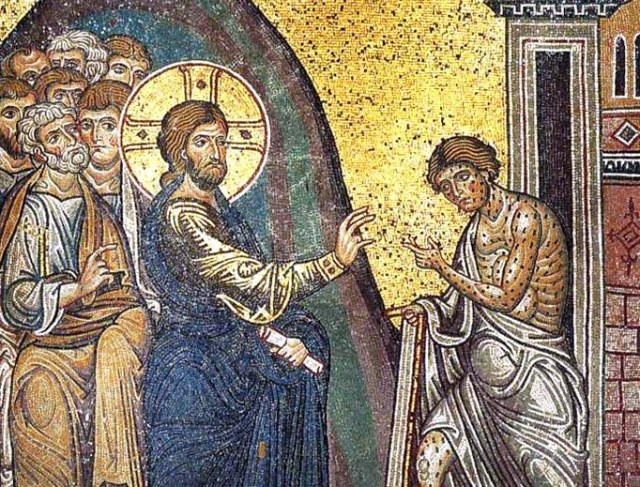
Associated with all this was not only fear but revulsion! It brings to mind the response of people like St. Francis of Assisi who were disgusted and revolted when they encountered lepers in medieval Tuscany. Of course, after his conversion, he kissed the Leper and the earliest Friars are remembered for their loving care of those afflicted with this fatal and contagious disease. I remember so well the same kind of revulsion being expressed when it became apparent that AIDS was somehow mysteriously connected to gay sex. For many gay men of that era, it meant a “forced expulsion from the closet.” Because of the nature of the disease there was no hiding that fact that they were, in fact, gay, and that they had been sexually active.

So, for gay men of my generation—who are also persons of faith—it is easy to identify with those afflicted with leprosy. The story of the “Grateful Leper,” though, is even more meaningful, powerful, and useful for us. Because this Leper is called, by Our Lord a “foreigner.” He is labeled and identified as an “other,” a “stranger,” an “outsider.” And then, unexpectedly and shockingly—he is presented as a person of tremendous faith. He is held up as an example of what it means to be a faithful disciple. What an unanticipated and delightful twist!

The great irony, is that, as so many of us have come to prayerfully discern, being LGBTQIA is not an illness at all—nor is it a choice. It is just who we are! We have come to believe that it is the very way that we were created by a loving and compassionate God.

Yet, we know, that–even had HIV not come along–for millennia, other “people of Faith,” viewed our “queerness” as a kind of moral disease. While they might not have singled us out as the only notorious sinners, we were to be “loved” at the same time that our “sin” was to be “hated.” We were warned that if we acted on our “disordered” and “unnatural” “inclinations” we were in danger of hellfire. Being LGBTQIA was viewed as a kind of “moral leprosy.” And yes, it was thought to be largely fatal and contagious (the words of Anita Bryant and others like her made this clear). Or else, it was dismissed as something which was “silly” (I was actually told that once by a medical doctor!) and which could be easily laid aside like any other “sin” if we repented and turned to Jesus!

This powerful story which is found only in the Holy Gospel According to Saint Luke is worth looking at more closely. It has much to say to the LGBTQIA community—and to all who are “grafted into” the Jesus Movement.

It is a story of communities in tension and conflict.

There is the community of Jesus and his closest friends. They are on their way up to Jerusalem. In the context of Luke’s Gospel, we know that Jesus is heading to Jerusalem to suffer and die. This is a farewell journey—though Jesus’ friends either do not really know that—or understand it. They are in denial. Despite the warnings of the coming passion, they do not really believe it is true. They may well hope that Jesus is wrong–mistaken. They desperately long to believe that is true. So here they are on a journey with him to Jerusalem-to the Holy City, to the Temple, into God’s presence. That is their destination. Later, in looking back on that last Passover Pilgrimage, they will remember everything which Jesus did and said—and in those words and actions will find meaning which they were not able to see, hear, and understand at the time. They will realize that God was pulling back the curtains and allowing them to see what was “really happening,” though at the time they were quite clueless.

There is the community of Samaria and of Samaritans—the place where this story takes place. Jesus and his disciples, we are told, are travelling from Galilee to Jerusalem—and that journey takes them through Samaria. How ironic. They can not travel from one “home enclave” to another without stepping outside their “own” reality into another. In recent years scholars have suggested that Galilee may have been far more diverse and Hellenized than believed previously (after all two of Jesus disciples, Andrew and Philip, have Greek names). But both they—and the Samaritans—would have viewed “Galilee of the Nations” as basically Jewish.

Of all the “other” communities, first-century Jews had the most contentious relationship with the Samaritans. Perhaps it is because they had far more in common than separated them. As is often the case, those differences were highlighted and intensified (as an aside, I remember from my childhood how careful the Southern Baptists in rural Appalachia were to stress their distinctness from the “Holy Rollers.”). I am not entirely sure that the Samaritans would have chosen to focus on the few differences—had they not been excluded, abused, and mistreated by the Jews of that era. Which wrongs and hurts came first? Who knows? But it is clear that there was a  mutual distrust, fear, and a reciprocal hatred.

The Samaritans are the “lost tribes,” the “Northern Kingdom of Israel” which had been conquered by the Assyrians. As a result, they had ceased to be “racially pure,” as viewed through a literal reading of the Law of Moses. They were viewed by first century Jews as “mongrels and muts.” They could not claim to be authentically Jewish—and yet they did! They believed in the one “God of Israel.” They accepted the Torah as God’s word (though not the oral law—odd that they had that in common with the Sadducees!). They had a Temple on Mount Gerizim (until the Maccabees destroyed it) in which the Tamid (offerings of spotless lambs, wine and bread) were offered twice daily. The Samaritans claimed to be descendants of Abraham—in fact, they claimed that the binding of Isaac had happened on their holy mountain and not on the Temple mount in Jerusalem (it is interesting that in Islamic belief it was Ishmael and not Isaac who was bound and that it might have taken place in Mecca).

So, there is very little, if anything, from their perspective, which ought to differentiate Samaritans from Jews. This would presuppose, though, that being Jewish could be a faith of choice and not only something into which one was born. It would mean that, the Jewish authorities would have to welcome the Samaritans as coreligionists—even if they actually viewed them as Gentiles. It would have to mean that room was made for them at the table. To the Jewish leaders of that time this was unthinkable, unimaginable, and unwelcome.

And so, the people of Samaria had to endure the horrors of tourist season—at least three times a year. Huge traveling groups of Jews passed through Samaria—coming and going on the way to and from Jerusalem each Passover, Shavuot and Sukkot. It was a reminder that the people of Samaria were excluded from those pilgrimage festivals. Were those Jews traveling through Samaria viewed as “Ugly Americans?” Perhaps! But clearly, over generations, the two groups had come to a level of open hostility and acrimony. Samaria was viewed as a dangerous place, a rough area, as an obstacle through which one had to pass before entering once again into the safety and “home” of the Southern Kingdom—of Judah and Benjamin.

The Gospels—especially Luke and John—present a much more nuanced view. Luke’s parable of the “Good Samaritan” suggests something which many in the audience would have thought impossible-even oxymoronic. A “Good Samaritan!” There aren’t any! Like the “Good Shepherd,” one could say, “I never met one!” Is there anything good that comes out of Samaria? And John’s story of the Samaritan Woman at the Well (a most effective early missionary and disciple—perhaps even the Apostles could have learned from her methodology) shows that the Jesus movement—from the very beginning was of importance, significance, and value to those “outside” of Judaism. This was not an accident or a mistake of history, but actually part of God’s plan.

In the Gospel of Luke-written for a Gentile audience-this makes perfect sense. The Acts of the Apostles (volume two) takes us from Jerusalem to Rome. It shows the astonishing inclusion not only of Samaritans but even of Gentiles who could claim no connection to Judaism at all! So, these early positive interactions between Jesus and Samaritans are intended to prepare us for what is coming! In Christ there is neither Jew nor Samaritan nor Gentile!

But there is a third community—the community of lepers. Almost nothing is said of them! The Book of Leviticus reminds us that this community existed even during the time of the Wandering in the Desert—part of the Exodus. Lepers apparently traveled from Egypt through the wilderness and into the Land of Promise. The Laws which laid out a detailed procedure for their detection, expulsion, and potential re-integration (Leviticus chapters 13 and 14) show that they had always been a part of the experience of the People of Israel. On the margins, sick and struggling, depending on the charity of others, these unfortunates were popularly believed to have been punished by God for some sin—either their own or that of their parents. Forced to cry out “unclean” when they came into contact with those unafflicted by their malady, they lived on the margin, on the fringe! They were viewed with fear, revulsion, and loathing.

The Gospel of Luke offers a surprising possibility. They were a community of love and support for each other. All of the things which had mattered before ceased to be of importance when one was declared to be impure and cast out. The rich, the poor, the educated, the illiterate, the powerful, and the weak were equalized by the disease. The only thing that mattered now was that they were a “leper,” that they were “unclean.” And so, in this new equality, the only thing that really counted was functionality—and mutual support. All recognized that as the disease progressed, they would become totally incapacitated and then would die a horrible and painful death. Digits, limbs, and features would be eaten by the disease and body parts would rot and fall off. If those who were relatively well did not care for those at the end of the disease, they had no reason to expect that anyone else would care for them when their time came to suffer and to die.

It is fascinating that this particular community of lepers was multi-ethnic. It was composed of Jews and at least one Samaritan. And yet, there is no indication that this was in any way a source of concern or division for them. They were united by the plague of leprosy. It made them into Siblings—into family! To those who did not suffer from leprosy—“all lepers are the same.”

A few details from the story stand out. United as one community, the lepers collectively called out—from a distance, as the law required–to Jesus–to beg for mercy, compassion, healing, love—and acknowledgement. Jesus could have ignored them and gone on his way (that is what we most often do when accosted by beggars and homeless people on the street). He did not. He heard them, acknowledged them and helped them (though I am not sure that they really appreciated that fact at first-had I been a leper, I would probably have thought that Jesus instruction to “go and show myself” to the priest was either naïf or else actually cruel—return to the very people who had cast me out for another dose of abuse and rejection?).

It is fascinating that in Luke, the lepers used a title for Jesus which is only found in Luke (and there apparently used seven times), “epistata.” Not one of the usual titles which one would expect, neither “Rabbi,” nor “Lord.” It is translated as “Master,” but a word search reveals that “master” is a weak translation.

The Epistata was the “number two person.” Literally, he was the person who stood immediately behind the person who held power. The word literally seems to suggest one who “stands in power over” another. I think that the English political term “Viceroy,” might be a good fit. This title recognized that Jesus was a representative of God. Jesus spoke with God’s voice and with God’s power. His orders were to be obeyed as if they came directly from God. What an affirmation of faith in Jesus! Wow! He did not seem to receive this kind of respect and obedience from his “own people”!

When Jesus told the lepers to show themselves to the priest (in Jerusalem and perhaps for the Samaritan on Mount Gerizim), they obeyed without hesitation or question—even if it made no sense to them! Jesus could have touched them and healed them (as he did with another leper in Luke 5: 12) or said a word and healed them. He did not! He asked them to follow the procedure laid out in the Law of Moses. He obeyed the Law and asked the lepers to do the same. He asked them to take the risk of being willing to give God another chance. We are later told that it was this faith which was the locus of their healing, “your faith has made you whole.” After all, they were not healed when they began the journey and only discovered that they had been healed along the way!

It was at this point that the story takes an unexpected turn. Nine of them continued on (to Jerusalem) to complete the order which Jesus gave them. At this point, the community which they had shared came to an end. After they were “re-integrated” into the People of Israel, the lepers returned to their “status quo ante bellum.” They, we imagine, returned to their families, and perhaps to their professions. They “resumed” their lives where they left off. All the differences and distinctions: cultural, social and economic, which divided them, were reinstated. They no longer had anything in common—except the experience of having at one point been lepers—and one can only imagine that they may have wished to quickly put that memory behind them.

For the “now-healed Samaritan,” this engendered a crisis of identity. To what community, if any, did he now belong? For whatever reason, he came to realize that the only community which mattered to him was fellowship and discipleship in following Jesus. And so, he turned away from Mount Gerizim—or to whatever destination he had been headed and went “home” to be with the Epistata, with the ‘Master.” His response when he saw Jesus is amazing. He first rejoiced and gave thanks to God (in a loud voice—this certainly sounds like a Post-Pentecost experience to me). He then gave thanks to Jesus (literally he “eucharisted” the ‘Master.”). And then he threw himself at Jesus feet in worship, love and praise. Talk about an example of love and devotion coming from “out of the blue.” A Samaritan, possibly even a gentile, at a time when not even those closest to Jesus expressed such love, devotion, and gratitude.

A final thought. Jesus called the Samaritan a “foreigner.” The word which he uses in Greek is allogenes—and this too is a word used only in Luke. It literally means to be “begotten other.” What a fascinating concept. The Samaritan may not be born of a Jewish mother—and so was not viewed by Jewish authorities as being Jewish—even though he may, in fact, have worshipped the one God of Israel. He was “other.” And yet, in Jesus, he found welcome, inclusion and community. Does he now follow Jesus? Does he return home and spread the good news there (like the woman at the well). We do not know. But we recognize that he was a tremendous person of faith—and was just the first among millions who chose to follow Jesus and to be “grafted into the Jesus movement.”

For those who are LGBTQIA, the word allogenes is a powerful one! We have not chosen a “lifestyle,” “sexual orientation,” or “gender identity.” We are “born this way.” Our birth has been labeled as “other.” But in Christ we are “reborn,” and made very members of the household of God. In Holy Baptism, we too are “sealed as Christ’s own forever.” Some may consider us to have been born or created as “different.” But, even if that were true, it would no longer matter “in Christ.”

Interestingly enough, Jesus did not ask the “Grateful Leper,” to change, to convert–to become Jewish—or even to become “Christian”. Neither does Jesus ask LGBTQIA persons to give up or surrender our being–to change and become something or someone else. He only asks that we become ever more fully who we have been created and are called to be. Now that is good news indeed!

Grateful Leper 2