“El Obrero merece su salario,” “The Worker should be paid.”

Pentecost 4C—Proper 9, July 6, 2025

The Episcopal Church of the Holy Spirit

in Greensboro, North Carolina

In the Spring of 1985, I completed my first year as a Seminarian for the Roman Catholic Diocese of Charlotte at St. Mary’s Seminary and University in Baltimore Maryland. For me, it was the first year of a five-year program. The intellectual formation program for the Roman Catholic Church was an intense one. For those who, like me, had earned a bachelor’s degree, there was the requirement of completing one year of philosophy before beginning the four-year study of theology.

Since I had, to this point, studied philosophy, and a few basic classes to give an overview of the faith, I had not yet benefited from any of the classes which would later be so useful to me—such as Scripture Classes, and homiletics or preaching classes.

The custom was for each Seminarian to be given a summer assignment. Since I had earned a B.A. in history, with minors in French and Spanish from Appalachian State University, the decision was made to put my Spanish to use.

And so, I found out that I was to serve that Summer as Director of the Greensboro Vicariate Migrant Ministry Program. I lived at Our Lady of Grace, here in Greensboro, but during the day, worked out of Holy Infant Church in Reidsville. I was to travel the back roads of Rockingham, Guilford, Davidson, and Randolf counties, with an occasional visit to Stokes County.

On one level, it was a completely different world. I had never known migrants or spent any time with them. And yet, they were engaged in various forms of farm work. That, I knew all too well, having been raised as a farm boy on Old Beech Mountain on the borders of Avery and Watauga counties—and on the border of Carter and Johnson counties in Tennessee.

I quickly came to understand that these migrants, and occasionally migrant families, did not have easy lives. They invited me to their homes and were quick to share with me whatever they had. I was shocked to see the living conditions—especially those of the single men—and to hear the stories of their meager pay and bad working conditions. I saw with my own eyes the places where they worked, and the run-down shacks they were given to live in.

 Oddly enough, they took all of this with the most amazing spirit. I almost never heard a complaint from any of them. Although they missed Mexico and the Central American Countries they were from—El Salvador, Honduras, and Nicaragua, they were very happy to be in the Piedmont of North Carolina, working hour after hour under the scorching sun. They were working to send money home to their families, and to save for a better future for themselves.

Each Sunday, I worked with Priests, from across the Vicariate to organize a Spanish Mass in the afternoon—after all the English activities had concluded at Holy Infant. Usually, following the Eucharist, there would be a feast—provided by a different parish from the Vicariate. Normally, I contacted the Priest who was coming, and the parish preparing the food about a week in advance.

About the third week that I was there, I contacted the Priest who would be coming the following week. He was very kind and gracious. However, he quickly took me by surprise. He did not really speak Spanish, he told me, but was willing to celebrate the Eucharist to the best of his ability. But, he would not preach. That, he felt, was beyond his ability, and he just did not have the time or the energy, on top of everything else that he was doing in his own parish, to try to prepare a sermon in Spanish.

He would come, he told me, under one condition. And that condition was that I would preach! I nearly had a litter of kittens right there on the spot. I hastened to tell him that I had completed one year of philosophy. I had not studied Scripture, I had not had any preaching classes, I had not even studied church history, for goodness sake. I was young, inexperienced, and really quite clueless. I had never preached, and was not honestly sure how to even go about it!

He told me that he was well aware of all that, and that none of that mattered. It was not about me, he said, but about the migrants. They deserved to have someone speak to them in their own language, which they would be able to understand, and to hopefully give them some words of encouragement and hope.

It quickly became apparent that his mind was made up. If I wanted a Spanish Mass, that was the price to be paid for it. I told him that I would try, that was all I could promise. He hastened to assure me that would be more than enough.

I agonized, prayed, read the readings a dozen times, and, in the end, wrote up a page or so. I was a nervous wreck. I was not afraid of the migrants, and felt very comfortable with them, but I was afraid that, as a preacher, I would be a failure!

Now I had heard many sermons in my life. I had a childhood full of Southern Baptist ones, and numerous ones in the five years that I had been a member of the Roman Catholic Church. But, it had never been me who was trying to preach—and in Spanish, no less. Talk about feeling completely “in over my head.”

Finally, the day came, and there I stood in front of the congregation for my first sermon! Interestingly enough, the Gospel passage was the very one we just heard the Deacon proclaim to us, from the tenth chapter of the Holy Gospel according to Saint Luke—the account of the sending out of the seventy.

As I looked out at the attentive congregation before me, something completely unexpected happened. It was as my eyes were opened to a completely new and different reality! I suddenly realized that those words I had just heard:

See, I am sending you out like lambs into the midst of wolves. Carry no purse, no bag, no sandals; and greet no one on the road. Whatever house you enter, first say, `Peace to this house!’ And if anyone is there who shares in peace, your peace will rest on that person; but if not, it will return to you. Remain in the same house, eating and drinking whatever they provide, for the laborer deserves to be paid. Do not move about from house to house. Whenever you enter a town and its people welcome you, eat what is set before you; cure the sick who are there, and say to them, `The kingdom of God has come near to you.’”

Words that the people in front of me had taken literally! They left everything behind them to travel, with great difficulty, and some danger, to a new country, to a new culture, to a new place to work. They were honestly like lambs, and some knew firsthand what it was to work for wolves. They had to accept whatever conditions they found the cost of even finding work. I was overwhelmed by the realization that they were amazing people of faith. They somehow trusted that God would be with them, would help them, and would provide the essentials that they needed to survive. Wow! And I suddenly realized that I was not sure that I had that kind of faith or trust.

Rather than having powerful words to share with that congregation, they ministered to me. Their own witness inspired me, challenged me, and encouraged me to view solidarity with the poor, marginalized, oppressed, and exploited to be at the very core of what it means to be a follower of Jesus the Christ.

There was a single line from that Gospel passage that was like an arrow, piercing my heart, “El obrero merece su salario!” “The laborer deserves to be paid!” That line has stayed with me all these years. It was really, my first introduction to the concept of “liberation theology,” of “social justice,” and of the theology, later to be so powerfully articulated of a “just living wage,” by John Paul II.

That one line, “the worker deserves to be paid,” was like putting on a new pair of glasses and finally seeing something important which I had never really seen previously. It would be easy to focus on a theology centered on heaven, and the things to come. Jesus, though, challenges us to combat injustice and oppression in the here-and now.

Are there hungry persons among you, feed them. Are there naked persons among you, clothe them. Are there sick persons among you, care for them. Are there people in prisons, and nursing homes, and hospitals, visit and comfort them!

And, in that moment, I came to understand that I would never forget that first sermon, that I would never forget the faith of those brave migrants, and that somehow I really wanted to work with them, for them, and to help, in whatever small way I could, to make their lives better.

My dear friends, some have been reluctant to speak of the good news which the Gospels share with the poor, the oppressed, the exploited, and the marginalized. Some of those who benefit from the status quo are quick to accuse those who speak out of engaging in partisan politics. And yet the Gospel of Jesus Christ will not be bound or limited by politics.

It is no accident that among those who first became followers of Jesus were many who were poor, destitute, looked down on, and marginalized. Even in the watch in the courtyard during the trial of Jesus, those gathered to watch made fun of the accents of Peter and the other disciples. They were poor fishermen from the middle of nowhere. They were not wealthy, powerful, well-educated or cultured. They spoke like country bumpkins, had calloused hands, and may have smelled like hard workers. And yet, they were the very ones Jesus chose to proclaim the good news!

In these difficult days which we face as a state and as a nation, I pray that we will not forget the hungry, homeless, and the marginalized. I pray that we will stand up for those who live in fear of harassment, deportation, and of abuse. If we do, I know that in loving them, in caring for them, and in attempting to meet their basic needs, we will also minister to Jesus, who has sent them to be our guests.

Summary of the Sermon in English and Spanish

El primer sermón que prediqué se basó en este pasaje del Evangelio de Lucas. El sermón fue en español. En el verano de 1985, yo estaba sirviendo como Director del Programa del Ministerio Migrante de Greensboro, trabajando en la Parroquia Santo Nino en Reidsville. El sacerdote que vino a celebrar la Eucaristía en español me dijo que solo vendría a presidir si yo accedía a predicar. Fue una experiencia aterradora, y me sentí completamente desprevenida e inadecuada. Sin embargo, al final, no pude decirle que no a Dios, y estaba dispuesta a al menos intentarlo.

Fue una experiencia que transformó completamente mi comprensión del ministerio y de la fe. En las personas reunidas ante mí ese día, encontré una mayor fe y confianza en Dios de lo que jamás había visto. En lugar de tener palabras poderosas para compartir con esa congregación, me ministraron a mí. Su propio testimonio me inspiró, me desafió y me animó a considerar que la solidaridad con los pobres, marginados, oprimidos y explotados está en el centro mismo de lo que significa ser un seguidor de Jesús el Cristo.

Esa frase, “el trabajador merece su salario”, me ha acompañado todos estos años. Sería fácil enfocarse en una teología centrada en el cielo y en las cosas por venir. Jesús, sin embargo, nos desafía a preocuparnos por la injusticia y la opresión en el aquí y ahora. ¿Hay personas con hambre, dales de comer? Están allí desnudos, vístelos. ¿Hay enfermos, cuídalos? ¿Hay personas en prisiones, hogares de ancianos y hospitales, visítalas y consuélalas?

¡Esta es la buena noticia de Jesús para todos nosotros hoy!

The first sermon which I preached was based on this passage from the Gospel of Luke. The sermon was in Spanish. I was serving as the Director of the Greensboro Migrant Ministry Program in the summer of 1985, working out of Holy Infant Parish in Reidsville. The Priest who came to celebrate the Eucharist in Spanish told me that he would only come to preside if I agreed to preach. It was a frightening experience, and I felt completely unprepared and inadequate. However, in the end, I could not say no to God, and I was willing to at least try.

It was an experience which completely transformed my understanding of ministry, and of faith. In the persons gathered before me that day, I encountered greater faith in and trust in God that I had ever seen. Rather than having powerful words to share with that congregation, they ministered to me. Their own witness inspired me, challenged me, and encouraged me to view solidarity with the poor, marginalized, oppressed, and exploited to be at the very core of what it means to be a follower of Jesus the Christ.

That one line, “the worker deserves to be paid,” has stayed with me all these years. It would be easy to focus on a theology centered on heaven, and the things to come. Jesus, though challenges us to worry about injustice and oppression in the here-and now. Are there hungry, feed them. Are there naked, clothe them. Are there sick, care for them. Are there people in prisons, and nursing homes, and hospitals, visit and comfort them!

This is the good news of Jesus to all of us today!

A Community of Love

SERMON FOR TRINITY SUNDAY—JUNE 15, 2025

THE EPISCOPAL CHURCH OF THE HOLY SPIRIT

In Greensboro, North Carolina

Theologians in the early Church spoke of the Most Holy Trinity as a “mystery.” In doing so, they were not suggesting that the Trinity was an intellectual “riddle” or “puzzle” to be deciphered, unraveled or explained. In fact, their words suggest quite the opposite—mystery is an invitation to explore, discover, and experience.

Interestingly enough, the same word, “Mysterion” in Greek was translated into Latin as “Sacramentum,” or “Sacrament.” To claim that the Holy Trinity is Sacramental is to suggest that an experience of the Trinity has the power to be life-altering, life-changing, and utterly transformative.

These words were written with great humility. They acknowledged that greatness of God and the limitations of humanity. God is so beyond our ability to understand and to comprehend that even the words we use fail to adequately describe the reality, the essence, the nature of God. And so, rather than attempting to explain or articulate, they concluded that we are best invited to contemplate who and what God is—for us!

Even so, there are occasionally exceptional theologians who give us some insight which we had previously lacked—who enable us to think in a new way. One of my favorites is the amazing German Jesuit, Karl Rahner. In a fascinating and thought-provoking article having to do with the “ontology of the symbol,” Rahner explained in as simple, direct, and helpful way—as I have yet to discover, a radically different way to think about God. Here I am paraphrasing in my own simplistic way a powerful, complex, and profound insight.

God, Rahner tells us, can best be understood as the fullest expression of love. God is love. A love that is so powerful, so fertile, so self-giving that God chooses to be real, effective, and present. In so doing, God reaches out in an act of love that completely changes and transforms love. In that act of self-less and generative love, the Eternal Son of God, Jesus, the Christ, is engendered (as the Creed explains clearly, “is begotten, not created). The Son, in turn, loves the Father with an all-encompassing love. That reciprocal love between the Father and the Son is the Holy Spirit.

So, the Holy Trinity could be best thought of as a Community of Love. It was, perhaps, this insight which caused our former Presiding Bishop, Michael Curry to say so often, “If it’s not about love, it’s not about God.”

Rather than thinking of this as a nice thought, or perhaps a platitude, it is a shocking invitation to enter into that love, to be transformed by that love, to be empowered by that love—and to imitate it by becoming a source, a channel of love. Really, this is at the heart of our Baptismal Covenant. Because God has so fully, and totally loved us, we are called to become a People of Love-a Beloved Community. A Community that so loves, and is so loving that it welcomes the wounded, and helps them to move towards healing and wholeness. A Community that sees a broken world, and works for justice, forgiveness, healing, and reconciliation.

In such a Community we see

-the sin of racial hatred and racism and say, “No, we reject that and will work to overcome it.”

-the sin of misogyny, the exploitation and devaluation of women, and say, “No, we reject that and will work to overcome it.”

-the sin of homophobia, transphobia, and violence against our LGBTQIA Siblings and say, “No, we reject that and will work to overcome it.”

-the sin of xenophobia, mistreatment, abuse, and exploitation of immigrants, migrants, and refugees, and say, “No, we reject that and will work to overcome it.”

-the sin of Anti-Judaism, Islamophobia, bigotry, and intolerance, and say, “No, we reject that and will work to overcome it.”

-the sin of marginalizing, excluding, belittling, or “othering” of any beloved person created in the image and likeness of God, and say, “No, we reject that and will work to overcome it.”

The invitation to become an authentic Beloved Community is one that challenges us to give witness-through words, but more importantly, through action. It reminds us that, if we really are incorporated into the very life of the Most Holy Trinity through the Sacraments of Baptism, Confirmation, and the Holy Eucharist, we must put our faith into action. That requires some courage. The Greek word of “witness” is “martyria.” From it we derive the English word, “martyr.” To be a witness does not necessarily mean that we will be asked to die for the faith we profess. But, it does mean that we will be willing to accept that there will be push-back, intolerance, and perhaps even encounter violence.

Yesterday, I traveled to Lexington, to the Davidson County Courthouse to join the national Protest against unjust and immoral policies and actions taken by our government. In doing so, I intentionally stated that I joined with our Latino Sisters and Brothers who most recently have experienced profiling, discrimination, racial hatred, and violence. We have been called to reach out, especially to recent arrivals (migrants, refugees, and travelers)—as well as those whose families have been in this country for generations—including many whose families were already present here in what is now the United States generations before the first settlers from England arrived—with love, care, and welcome.

I honestly had no idea what to expect, and so traveled to Lexington with some nervousness, and even fear. I knew that I would be one small witness in a large arena. To my delight, it was a wonderful experience. Several hundred people gathered to peacefully protest. There was a joyous spirit in those gathered. To my delight, they were kind and gentle—even, for example, when a lady, driving by, rolled down her window and cursed us, using shocking and vicious profane words. She told us that we would be going to hell for our actions! The amazing thing is that she was the exception! Many people cheered us, beeped their horns in support, and waved at us. Truly, this encouraged me and gave me hope!

Our celebration today of the Most Holy Trinity reminds us that God is love! May that love fill our hearts, transform our lives, and empower us to become loving people who truly care for every person we encounter.

A final note—today is Father’s Day. So, we also acknowledge and celebrate the gift of Fatherhood. We pray in thanksgiving for faithful and loving Fathers, Grandfathers, Stepfathers, Foster Fathers, Godfathers, Uncles, Mentors, and for all who take the place of Fathers in the lives of children. We ask God to bless them in their vocation, and to encourage them to be supportive, affirming, caring, and truly loving with those who have been entrusted to their care.

A New Commandment–“Love each other”

A SERMON FOR THE EPISCOPAL CHURCH OF THE BUEN PASTOR in Durham, NC

The Sixth Sunday of Easter C

Dear Sisters and Brothers,

I greet you in the name of Our Resurrected Lord and Savior, Jesus the Christ, and in the names of his humble disciples Francis and Clare—who accepted his call to help rebuild the Church, which was in ruins. In our own time and place, I pray for the wisdom for each of us as we move forward to welcome the Lord, ever more completely into our minds, hearts, and lives, and for opportunities for us to work to build up and to strengthen authentic Beloved Community.

Before I continue with the words which I have prepared to share with you today, I would like to do something which I very rarely do. I would like to begin with a personal note. Thank you for your warm and gracious welcome to me. I would like to especially acknowledge and thank Father Ricardo for the amazing support, encouragement, and affirmation which he has given me over the past few months. I have so enjoyed the occasions in which I have been blessed to worship with you—and to take photos, which I pray will be of some small use to this community, to the Communications Ministry of the Diocese of North Carolina, and to the Office of Latino/Hispanic Ministries of the Episcopal Church.

To my great surprise and delight, this is a Eucharist which has special meaning for me. It is the first time, since the Reception of my Ordination as Priest in the Episcopal Church that I have had the opportunity to Preside at the Eucharist. For that reason, please know that, going forward, you will have a very special place in my heart.

Song:

Un mandamiento Dios nos ha dado. Que nos amemos unos a otros

Que nos amemos, que nos amemos. Que nos amemos unos a otros

My dear friends, if we hear nothing else today—other than the simple words of this song—we have heard the proclamation of the Holy Gospel! The message is simple, clear, and direct—Our Lord has commanded us to love each other!

This direct and immediate command is one that could cause lawyers to be begin to ask questions, but who is the other that I am commanded to love? It is not unlike that question posed to Jesus, but who is my neighbor?. It is not unlike that question Cain posed to God, who is my brother? In every case, the answer will be that there are no exceptions. We do not get to choose who we will love. Jesus’ command is that we love everyone!

We can not help but think of that often quoted comment by our former Presiding Bishop and Primate, Bishop Michael Curry, “If it’s not about love, it’s not about God!” The good bishop rooted his theology in the shocking reality of the Primitive Church. A group of believers in the Syrian (gentile) city of Antioch took everyone by surprise. There was something different about them, something unexpected about them, something that no one could ever recall seeing or experiencing before. They loved each other! And because of the power of that witness, those around them searched for some motivation. What was it that caused them to not only profess that they loved each other but to demonstrate that belief in the way that they treated each other. The only conclusion that outsiders could come to was that they were acting a lot like that Jesus. And so it was that they began to call them, for the first time, Christians.

It was not that the believers in Antioch began to pat themselves on the back and say, “Wow, we are doing a good job of being disciples of Jesus.” Rather, it was that others were so surprised by their behavior that they began to remark on it and labeled them as disciples, as friends, and as followers of the Christ. And thus we gained our name. All because of love. It was love that formed us into a community and made us Christians!

These days it feels as if though love is a rare commodity. In a time of division, polarization, and disharmony, we do not see a lot of love, we do not hear love expressed, and we do not feel that we are loved—or that others who are important to us are loved or valued. Honestly, it can feel that we are being attacked, that our Church is under attack, and that those we love are not safe. What are we to do in such a time? How are we to respond to those perceived attacks?

It would be simple if the opposite of love was hate. That is far too simple. It does not take much effort to find those who spew fountains of hateful words—words of racism and prejudice, words of misogyny, words of homophobia, bigotry, xenophobia, and words which deny the basic goodness and dignity of any person. What is more disturbing, more frightening, and more destructive is not hatred—it is antipathy. It is not that some choose to hate, it is that they choose not to care—and are unwilling to take a stand. They are unwilling to speak truth because it is inconvenient. In a few cases people are afraid—and with good reason. But in the vast majority of cases, they choose not to speak our because it will make their lives uncomfortable. It is time for each of us to ask the difficult question—is that hypothetical “they” of which I was just speaking “me.” Is it I?

The Hebrew Scriptures make it abundantly clear that there are three groups of people who are sacred—who are holy—to God: Widows, orphans, and aliens. In other words, any who are on the margins, who are vulnerable to be abused and exploited are precious to God. And, as children of God, we are commanded to love them, to care for them, to speak out on their behalf, to defend them, and to do all in our power to assist them. If we fail to do that, we run the risk of hypocrisy. Our mouths profess our belief in God, but our actions do not give testimony to that profession. As Saint Paul might tell us, our words are like “noisy musical instruments,” which only distract. They are ultimately meaningless.

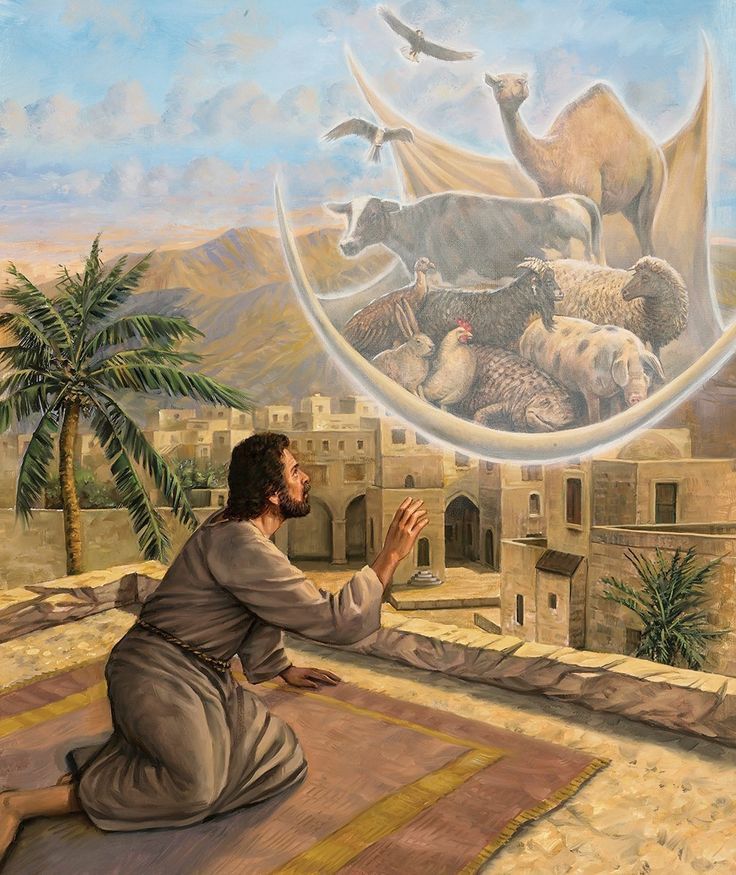
Our reading today, from the Acts of the Apostles (the sequel to the Holy Gospel according to Saint Luke) reminds us of a moment of conversion in the life of the Apostle Peter. Peter is taken by surprise to discover that God is inviting gentiles into full and active membership in the Church. It is not that Peter hated Gentiles. It is just that he did not really spend any time thinking about them. For him, they were “other.” He had not considered that they were worth bothering with. When he is given a vision which calls into question everything he thought he knew, he is shaken. The very foundations of his faith are knocked over. He was sure that he knew what God wanted. He is invited—in a very dramatic way, kind of like Paul had been on Damascus Road—to reconsider what God is all about. Peter comes to understand that God does not consider anyone—anyone at all—to be unclean, impure, throw away, trash. In God’s eyes none of the distinctions which humans are prone to make matter. Every person is beautiful, worthy, and holy—because every person, without exception, reflects the reality of the Creator of all.

My dear friends, we are called today to be persons who love—deeply, and without reservation. We are called to be such faithful followers of Jesus that others will look through us to see the love of Jesus which impels us. May we never grow weary in loving, in serving, and in caring for those who God has placed all around us. For in loving and in serving them, we will love and serve Jesus—present in them.

Jesus has indeed given us a new commandment—that we love one another!!