Inclusion

Facebook reminded me of a post I wrote three years ago. I think this is still true.

In the past few weeks I have returned to thinking about radical inclusion and unconditional hospitality. Here is an excerpt from a reflection that I wrote on this theme several weeks ago:

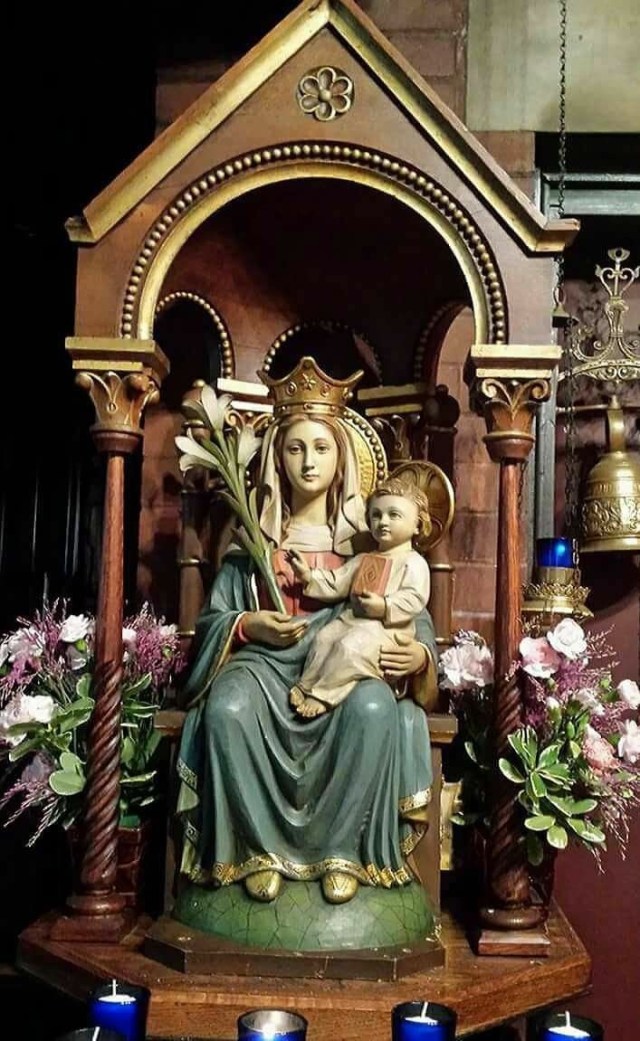
I have spent a good deal of time contemplating the possibility of a new reality—that of “unconditional hospitality.” In part this flows out of my own deep commitment to hospitality as I see it exemplified in the reality of the Apparitions by Our Lady of Walsingham to Blessed Richeldis in 1061. It also flows from the deep Benedictine Monastic commitment to “receive every guest as Christ.” Finally, on the most basic and fundamental level, it is a desire to be like Our Lord who loved and welcomed everyone without question or hesitation—fully knowing that not all who loved him (or who opposed him) would be able to accept his actions. He certainly paid the price for his actions!

It seems to me that the basic problem is that we begin in the wrong place. Rather than thinking or worrying about community and how community will deal with or handle all this (and what price they will pay for their openness and inclusion in the wider communities in which they live, move and have their being), we ought to start with a more basic question: “What is God calling this person to be, and to do?” And that has nothing to do with gender, race or sexual orientation or gender identity. It flows from the heart-held conviction that every human being is created in the image and likeness of God, and that “all the Sacraments are for all the Baptized.”

The difficulty is the conflict between “ideals” and “the real world.” It is easy to speak of what “should be.” It is an entirely different matter to make it happen. Real community takes a lot of work and at times can be difficult—even painful! A metaphor which has helped me to understand that over the years also came from an old monk. “Being in a community is like picking up a bunch of pebbles along the road. If you put them in a sack and tie it to your belt, as you walk along they will bump together. Over time they will knock of all the rough edges and become smooth.” Of course that means that all the stones will have to loose their rough edges—even mine! That is never a pain-free process for any who are involved in it.

So perhaps the most helpful question then is “What might a community look like if it more fully expressed the actual membership of the Episcopal Church?” There would be women and men; young and old; rich and poor; people from numerous cultures and ethnic groups—speaking various languages; people who are heterosexual or homosexual or intersexual; people who are married, in a relationship, single or celibate; people who are struggling with all kinds of messy personal, professional and family issues; people who are lonely, confused and frightened; and people who are flawed and sometimes needy. And yet they would be united in an attempt to encourage, support, and love each other.

“O Blessed Lady of Walsingham, pray for us, that our hearts may be truly open to Welcome and Receive every Guest as your Son, Our Lord Jesus Christ. Amen.”

36F92E5A-97EA-4E98-AA66-0F881F0CE703

“Ausculta,” “Listen,” A Reflection on the Prologue of the Holy Rule of Saint Benedict

Ausculta,” – “Listen.”
A Reflection on the Prologue to the Holy Rule of Saint Benedict
Prepared for the Order of the Daughters of the King
of Trinity Episcopal Church
in Easton, Pennsylvania.
February 25, 2018

ut in omnibus glorificetur Deus,” “That in all things God may be glorified.

This is a reflection which I prepared for a meeting this afternoon of the Order of the Daughters of the King at Trinity Episcopal Church in Easton, Pennsylvania. “Ausculta”


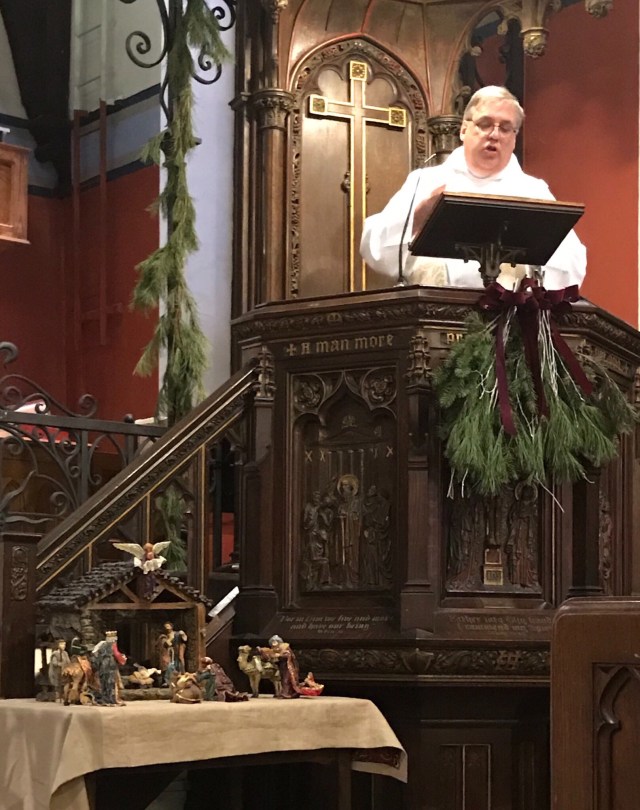
 A sermon for the First Sunday in Lent
preached at
 Trinity Episcopal Church
in Easton, Pennsylvania
February 18, 2018

                                      “The Catechumenate not the Penitentiary.”

The First Letter to Peter makes a rather surprising statement about baptism: “And baptism, which this prefigured, now saves you—not as a removal of dirt from the body, but as an appeal to God for a good conscience, through the resurrection of Jesus Christ . . ..” It raises the possibility of a “good conscience,” that is to say—the ability to make good, wise, holy and helpful decisions because of the power of the resurrection of Our Lord Jesus Christ as a daily reality in our lives.

One of the most interesting things about being part of a Liturgical Tradition is that one hears the same words again and again. And yet, when we reflect on this reality, I think that most of us will admit that we really do not hear them, in the same way, each time. As listeners, we are always in a different frame of mind. We are impacted by the things which surround us. And these influence what we hear. For instance, I am always astonished—and delighted—when I discover something new in an old passage which I have heard many times before. Although this is especially true of readings from Sacred Scripture, it is equally true for me in my reading from the Holy Rule of Saint Benedict, and in the passages which I hear from the Book of Common Prayer.

Just a few days ago, on Ash Wednesday, I heard once again that powerful invitation to a Holy Lent from the Book of Common Prayer. This year, though, I heard and then reflected on something quite different than I have in the past. May I ask for your indulgence for a moment as I remind you of the introductory passage from pages 264-265.

“Dear People of God: The first Christians observed with great devotion the days of our Lord’s passion and resurrection, and it became the custom of the Church to prepare for them by a season of penitence and fasting. This season of Lent provided a time in which converts to the faith were prepared for Holy Baptism. It was also a time when those who, because of notorious sins, had been separated from the body of the faithful were reconciled by penitence and forgiveness, and restored to the fellowship of the Church. Thereby, the whole congregation was put in mind of the message of pardon and absolution set forth in the Gospel of our Savior, and of the need which all Christians continually have to renew their repentance and faith. I invite you, therefore, in the name of the Church, to the observance of a holy Lent, by self-examination and repentance; by prayer, fasting, and self-denial; and by reading and meditating on God’s holy Word. And, to make a right beginning of repentance, and as a mark of our mortal nature, let us now kneel before the Lord, our maker and redeemer.”

There are several important thoughts contained in this passage
-One prepares to celebrate the Resurrection of Our Lord Jesus Christ by a time of penance and fasting
-Lent was originally a season in which converts were prepared for Baptism
-Notorious sinners were restored to the Church through penance and forgiveness
-Christians must continually renew our repentance and faith

Here are suggested ways to observe a holy Lent
-self-examination
-repentance
-prayer
-fasting
-self-denial
-read and meditate on God’s Holy Word
-receive the “mark of our mortal nature” (the final point
is my paraphrase).

This is a very rich offering—but quite an agenda. A part of me feels overwhelmed–and just a bit tired from even thinking about trying to do all this. The good news, though, is that this is not a time for a New Year’s resolution. I do not have to make an unreasonable—or even impossible—promise that my life will be completely changed by Easter. Even a few simple changes could yield a huge outcome: I could, of course, pick just one of these things, and, if I did, I think I would truly have a holy and productive Lent.

There is a more fundamental issue here. In our Christian tradition, we chose to combine two strands. We combined the practice of the Catechumenate (the time of preparing those who were to be Baptized and Confirmed for their reception into our community) with the Reconciliation of “Notorious Sinners.” These two strands have competing and conflicting theologies. I will even go so far as to suggest that they might even be—on some level—contradictory or incompatible.

As is often the case, though, when trying to hold conflicting perspectives in harmony, there is always a “winner” and a “loser.” And in this case, there is no doubt to me that the “Notorious Sinners” soundly defeated the “Catechumens.”

As an aside, this seems to be the very kind of thing that our friends at Forward Day by Day were thinking about when they created “Lenten Madness.” In a word, they invited us to completely re-think Lent—and in a fun, and thoughtful way. That is a very good thing!

The early church appears to have really been confused by the reality of fully initiated Christians appearing to commit serious sins. For them, the big three were “Murder,” “Adultery,” and “Apostasy.” The latter term, unheard these days, means to publicly deny one’s faith. Some Christians proposed a “one-strike” approach—do any of these things and you are out—no questions asked. Later, some loosened up a bit—more of a “three-strike,” approach. Even that, though, was accompanied by a very harsh penitential regime.

The “Notorious Sinner,”—frankly, I cringe whenever I hear that term! What makes any sinner more notorious than another? Only the ones who are caught? And what constitutes a “notorious sin anyway?” Why should your sin of choice be any worse than mine? And really, to paraphrase a famous contemporary thinker, “Who am I to judge?” This smacks of the kind of legalism and narrow-minded thinking which has been used to brutalize and demean people for millennia—in every faith tradition.

In the end, though, this is exactly the kind of thinking which came to dominate our approach to Lent. On one level, it had the advantage of being fair. We were all supposed to be treated as “notorious sinners.” On the other, Lent was a real downer. We were told very negative things about ourselves: “we are all fallen sinners, there is not much to be said about us which is good. We need penance, sacrifice, denial, mortification and suffering.” This is all primarily tied into the temptations of Christ in the desert—and into the Passion of Good Friday. There is almost no connection with the Resurrection!

When all is said and done, it produced a series of overly introspective and cranky Christians. It caused us to suffer for forty or more days—like someone serving a long prison sentence. We “did our time,” but all this suffering had limited impact on our spiritual lives. When Easter came we returned to the “status quo ante bellum,” or to “life as normal,” until entering the same tortured cycle the following Ash Wednesday.

What if we were to consider another paradigm? What if we were to focus on the “Catechumenate” rather than the “Penitentiary” as our primary model for Lent?

It is always helpful to have an outward and visible symbol for “sacramental moments.” What about a hug? When each person comes up for the administration of the symbol, the celebrant might say something like, “You are loved by God-Absolutely, Entirely and Unconditionally. Now extend that same love to every person you meet.”
What about giving each person a small bag of palm ashes—and ask them to mix them in soil with a fast-growing flower seed (is there a lovely plant which would grow and flower in 45 days)? The symbolism would be to invite us to consider that our mortality will give way to the “Resurrection of the body?” And then the flower could be gifted to someone—to brighten their life and to encourage them—a real sign of Easter!

It could also be a time to contemplate how we would act if we always felt loved, cared for and valued? We are! And yet, most times we have been made to feel like notorious sinners rather than someone who is loved and sealed as Christ’s own forever. Does that help us to make better decisions or to be holier people? I am sorry to say that I do not think so.

Lest I be accused of being naïve, I readily confess that I believe that evil exists. I believe that we often choose to do horrible things. And yet, under other circumstances, we might well choose to do good rather than evil. When we are wounded, broken and fragile, we are not always able to do the best that is in us. Throw in addiction, poverty, injustice, cruelty and systemic evil—and it truly is a miracle that any of us are still alive. And yes, throw in easy access to firearms and ammunition! I do not have to say anything more.

We need to give this a great deal more thought and prayer. I do know this, what we have been doing—rather routinely—does not seem to be transforming our world—or us. I can’t help but wonder if something more loving, encouraging, and empowering might produce a better outcome. When all is said and done, that is what Lent seems to be saying to me these days—” with the help of God’s love and grace—and with the support of others, things may yet be better.” That is truly good news!

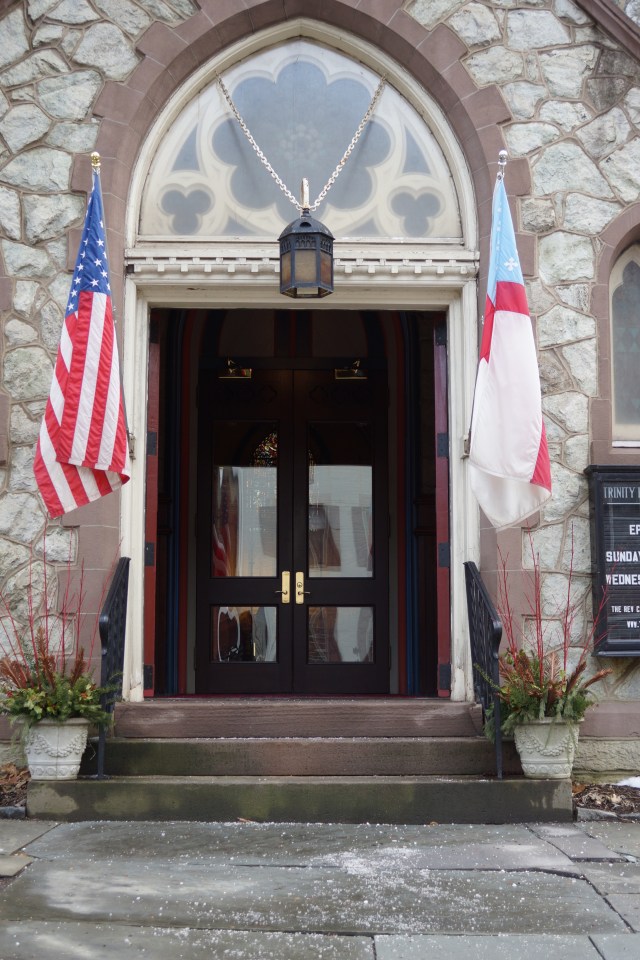
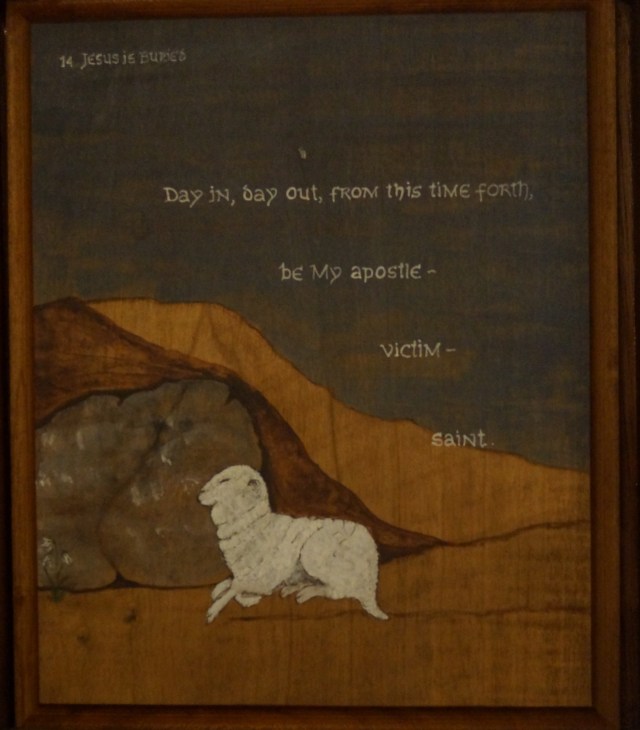
Here are the photos which I took this morning in Easton.
DSC03385

All the baptized have a vocation!

The Third Sunday After the Epiphany
January 21, 2018
Trinity Episcopal Church
Easton, Pennsylvania

Heavenly Father, we thank you that by water and the Holy Spirit you have bestowed upon your servants the forgiveness of sin, and have raised us to the new life of grace. Sustain us, O Lord, in your Holy Spirit. Give us inquiring and discerning hearts, the courage to will and to persevere, a spirit to know and to love you, and the gift of joy and wonder in all your works. Amen.”

The other day I saw a funny cartoon on Facebook. It depicted a conversation between Mr. & Mrs. Jonah. In the word bubble over her head were these remarks, “You are gone for three days. Then you come home smelling like fish, and tell me some crazy tale about a whale. What am I supposed to think?” As anyone who has a fisher in the family knows, fishers are not the most reliable of persons when it comes to telling the truth about really happens during a fishing trip!

When one reads the Gospel of Mark, there can be the sense that one is on what the French call a “TGV” or a “Train à Grande Vitesse.” On these high-speed trains, it certainly feels as if though things are progressing very quickly. I once road one from Paris to Bordeaux. It was an amazing experience—and it was very fast!

The feeling of high-speed that one finds in Mark can be a good thing. Above all else, it reminds us that the Holy Gospel According to Saint Mark can be read quickly. In fact, when I was in Seminary, one of the assignments which we were given was to sit down and to read this Gospel from beginning to end in one session. I assure you that it is possible to do this—and, in fact, encourage you to give it a try. “Your mission, should you choose to accept it . . . .”

It seems that it was just yesterday that we heard the account of the Lord’s baptism in the River Jordan—which for Mark shows as the beginning of Jesus’ public ministry. Then too, we are still in the “Sundays after the Epiphany.” So the account of the Adoration of the Magi at Bethlehem (from the Infancy Narrative of Matthew) still rings in our ears. We might well be tempted to take a few minutes to reflect on what those intriguing gifts of gold, frankincense and myrrh have to tell us about the ways in which this “Public Ministry” of our Lord will unfold.

Scripture Scholars and theologians like to speak of the “Three-fold ministry” of Jesus. In this view, he is depicted as “Priest” (represented by the gift of frankincense—because, for the People of Israel, a priest offered sacrifice to God); “Prophet,” (represented by the gift of myrrh—because, sadly, prophets were often killed for speaking God’s truth and myrrh was used to anoint the body at the time of burial); and “King,” (represented by the gift of gold—the crown was often made of gold. Remember too that lovely line from Psalm 45:9 “at your right-hand stands the queen in gold of Ophir.”).

The Christian Church, in reflecting on the mission of Our Lord, concluded that Jesus was a Priest who inaugurated the life of Grace which is found in the Sacraments. He is also seen as both “Priest and Victim” through his passion, death and resurrection. He is viewed as the Prophet who announces God’s vision that each person is created in God’s own image and so is worthy of Love.  Dignity, and Respect. He is seen as the Servant-King who lovingly inaugurates God’s kingdom. A kingdom which is already present, but not yet complete. A kingdom which will come to its fulfillment through his ministry—and the ministry of those who labor with him.

The account of the call of those first Disciples—and Apostles makes clear an essential point. From the very beginning, the ministry of Jesus was one which takes place in the context of Community. In fact, we are told, in the Acts of the Apostles, that the choice of the person who was to replace Judas Iscariot would be determined by one important fact–that he had been present from the very beginning of the ministry of the Lord.

Over the centuries, a great deal of thought has been given to the “Call to Discipleship of the Twelve.” There is even a special word used to describe this—derived from the Latin root for “Call” or “Calling.” That word is “Vocation.” It is a very good thing to reflect on the accounts of the Calling of the Twelve and on the role which they came to play in guiding our Community of Faith. If we only think of them, though, we miss out on something even more important—we miss out on our own vocation, we fail to hear and respond to our own calling!

Years ago, the understanding of “vocation” was a narrow one. It was one which appeared to be given to only a few. In those days, men—and only men—were believed to be called to the Vocation of the Ordained Ministry—to Serve the People of God as Deacons, Priests, and Bishops. And while both women and men might be called to a vowed life as Religious Sisters and Brothers, it meant that they were automatically called to a life of chastity and of celibacy. Sadly, most lay people thought that the only vocation to which they might be called was to matrimony. I do not in any way wish to lessen the beauty, importance, and significance of Holy Matrimony! But, I do think it sad that many were led to believe that choosing to love and to share their life with another person meant that they would automatically be excluded from any other role in the life of the Church.

Here I choose to hold my tongue regarding other associated issues: the gift of sexual expression, gender, gender-identity, and LGBT identity. I will also refrain from comments about the sad ways in which race was used to determine who might and could not have a vocation.

While the Protestant Reformation opened the door to the possibility of understanding “vocation” in a more holistic, inclusive, and realistic way, it took many centuries to understand two important realities: every vocation is primarily rooted in the Sacrament of Baptism, and every vocation is rooted in Community.

From my own perspective, the single greatest contribution which the Anglican-Episcopal Tradition has produced is our understanding that in Baptism each and every person is called to share in the three-fold ministry of Christ. Every single person who is baptized is “Priest, Prophet and Ruler.” Just the other day, I commented that the single most important line that I saw in a parish bulletin said—oddly enough, after a list of all the clergy— “Ministers: All the Baptized.” Now I really like that it did not say, “All Baptized Members of this Congregation,” or “All Baptized Episcopalians.” It did not even say, “All Baptized Adults!” Wow, every baptized person of any age has a vocation!

For me, what all this means is spelled out—at least in the essentials—in our Baptismal Covenant. Some other time I hope to have the opportunity to further explore with you the implications of those words.

For now, though, I want to focus on one primary observation. It is my own understanding that the Sacramental Life and the ordained Ministry in the Church are primarily designed to empower the laity to exercise their own Ministry in the World.

After all, the laity live, work and minister every day to people who may never meet a Religious, a Deacon, a Priest, or a Bishop. And many of them will never enter the doors of a Church Building. It is the baptized “alter-Christus” or “Other Christ” who will preach the Gospel through their Words and Deeds. And it is this Baptized person, “Sealed as God’s Own Forever,” who will invite others to come and follow the Lord in the Community of Faith. For my money, that is an exceedingly valuable calling and vocation.

From that number, of course, some will receive additional and subsequent callings. Thankfully, we live in a blessed moment in which race, gender, sexual orientation and marital status are no longer viewed as impediments or roadblocks to answering these calls.

Our prayer to “welcome the newly baptized” is one that we might choose to pray—for ourselves and others–each day, as we each seek to say “Yes,” to God’s call:

“Confess the faith of Christ crucified, proclaim his resurrection, and share with us in his eternal priesthood.”

DSC02299

A prayer for Mother Laura upon her retirement

A Prayer for our Rector upon her retirement

We thank you for our Rector, Mother Laura,
and for our life together in this congregation and community.
You have led her by the Holy Spirit
to serve your people in this place,
to build up your Church,
and to glorify your name.
We have worked in common for the sake of the Gospel.
Together we have studied your Word.
Together we have broken bread and given thanks.
In thanksgiving, we praise you for raising up faithful servants
among us for the ministry of your Church.
And we pray that Mother Laura
may continue to exemplify, in word and deed,
the Gospel of your Son.
Grant that we, with her, may continue to serve you
in the Church on earth,
and be brought to rejoice in your kingdom forever;
through Jesus Christ our Lord. Amen.

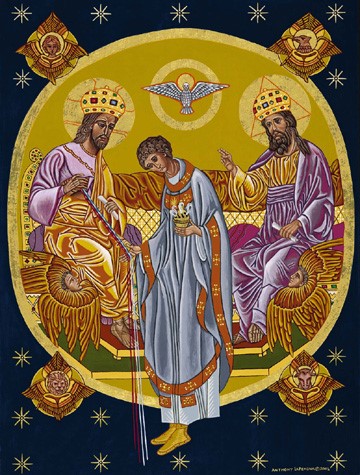
Priesthood Icon

“Entertaining Angels unawares”

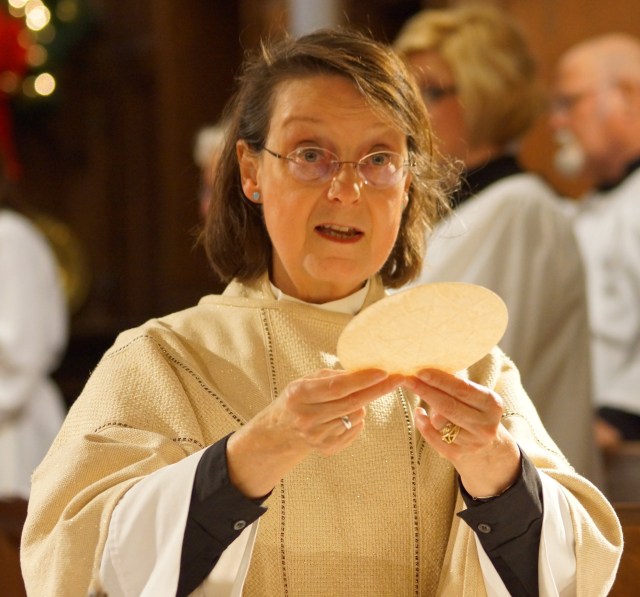
The Letter to the Hebrews reminds us of the importance of hospitality–lest we “entertain Angels unaware.” A few times in my life I have encountered people who not only profess this charism, but who actually live it. One of those unexpected gifts in my life has been the Revered Canon Laura Thomas Howell, Obl. S. B. who has just retired as the Rector of Trinity Episcopal Church in Bethlehem, PA. Mother Laura has been my boss for three months and has had an impact on my life which has been truly transforming–she is indeed a messenger of God’s love and grace to me–an “angelon.”. At every significant stage of my life God has provided me with a mentor and friend who has guided me in moving from one place to another. Quite honestly, I do not think that my present growth, hope and strength would have been possible without the encouragement and help which Mother Laura has given me. I am, honestly, sad that I will not be able to work with her day in and day out for many years. But my gratitude outweighs my sadness. I remember her this weekend as the parish gives thanks for the gift her ministry over many years. God grant her many happy years.

DSC04595

Finding God in the preached word — Father Andrew

I had trouble posting this earlier in the week. Let me try again.

An important way that I have found God over the years—and heard God’s voice is in the word of God proclaimed and preached. My pastor, Fr. Andrew (The Reverend Canon Andrew J. Gerns, Rector of Trinity Episcopal Church in Easton, PA) is a gifted preacher. Over the many years that I have been a member of the parish, I can not think of a single sermon I have heard him preach which did not interest me, comfort me—or challenge me and cause me to think about something in a new way. His sermon, this past Sunday, though, was an especially good one. I will share with you a few thoughts which I took away from it. Though I should warn you of a fact which any experienced homilist knows well—people often “hear” things which the preacher did not in fact say. But this is what I heard—as I remember it,

“This season celebrates God’s generosity.”

“Logos (Jesus as the Word of God) is the best word ever.”

“To imitate the Word is to do acts of love, kindness and mercy.”

“Christians were unusually compassionate to their neighbors.” That is the reason that membership in the Church grew so quickly in the early church.

More to rejoice

Here are more of my favorite lyrics from the Akathist to the Theotokos.

“Rejoice, Thou through whom the curse will cease! Rejoice, recall of fallen Adam: Rejoice, redemption of the tears of Eve!”

“While the angels were chanting, the shepherds heard of Christ’s coming in the flesh, and having run to the Shepherd, they beheld Him as a blameless Lamb that had been pastured in Mary’s womb, and singing to Her, they cried: Rejoice, Mother of the Lamb and the Shepherd: Rejoice, fold of rational sheep”

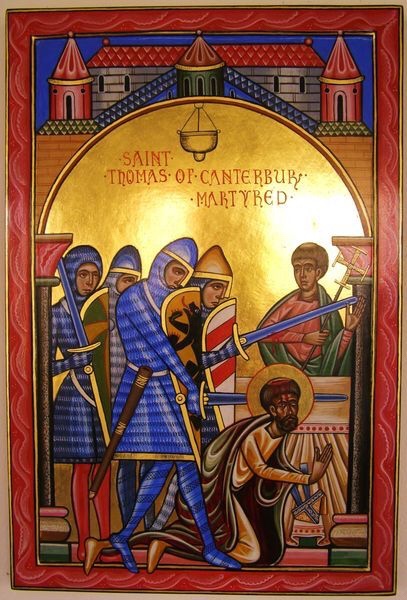
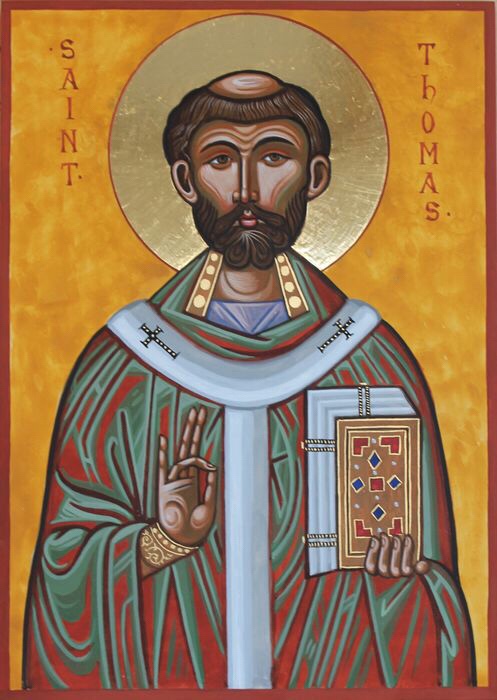
St. Thomas Becket

On this Feast of Thomas Becket we are challenged to be fearless in proclaiming our understanding of truth. May we have the courage to be faithful to our deepest held convictions–regardless of the cost.

Father,
you confirm the true faith
with the crown of martyrdom.
May the prayers of St Thomas Becket
give us the courage to proclaim our faith
by the witness of our lives.
Through our Lord Jesus Christ, your Son,
who lives and reigns with you
in the unity of the Holy Spirit,
one God, for ever and ever. Amen.

.